

Grow microgreens at home with these steps like a pro
Growing microgreens at home has become increasingly popular because it allows gardeners to produce fresh, flavorful greens in a small space year-round. These young plants are easy to grow indoors and can provide a convenient source of fresh harvests without the need for a large garden. With the right growing tray, growing medium, and lighting, many microgreens can be harvested in just a few weeks. Whether you're a beginner or an experienced gardener, the growing process is simple, rewarding, and an excellent way to enjoy homegrown greens right from your kitchen or growing area.
Understanding Micro Cilantro and Coriander Microgreens
Micro cilantro and coriander microgreens come from the same plant species, but they are harvested at very different stages of growth. In the United States, the leaves are commonly referred to as cilantro, while the seeds are known as coriander, which is why you'll often see the terms used interchangeably. Micro cilantro is harvested shortly after germination, usually around the true leaf stage, making it a popular choice for home gardeners who want a quick harvest. Compared to mature coriander plants, coriander microgreens offer a more delicate texture, concentrated flavor, and significantly shorter growing time.
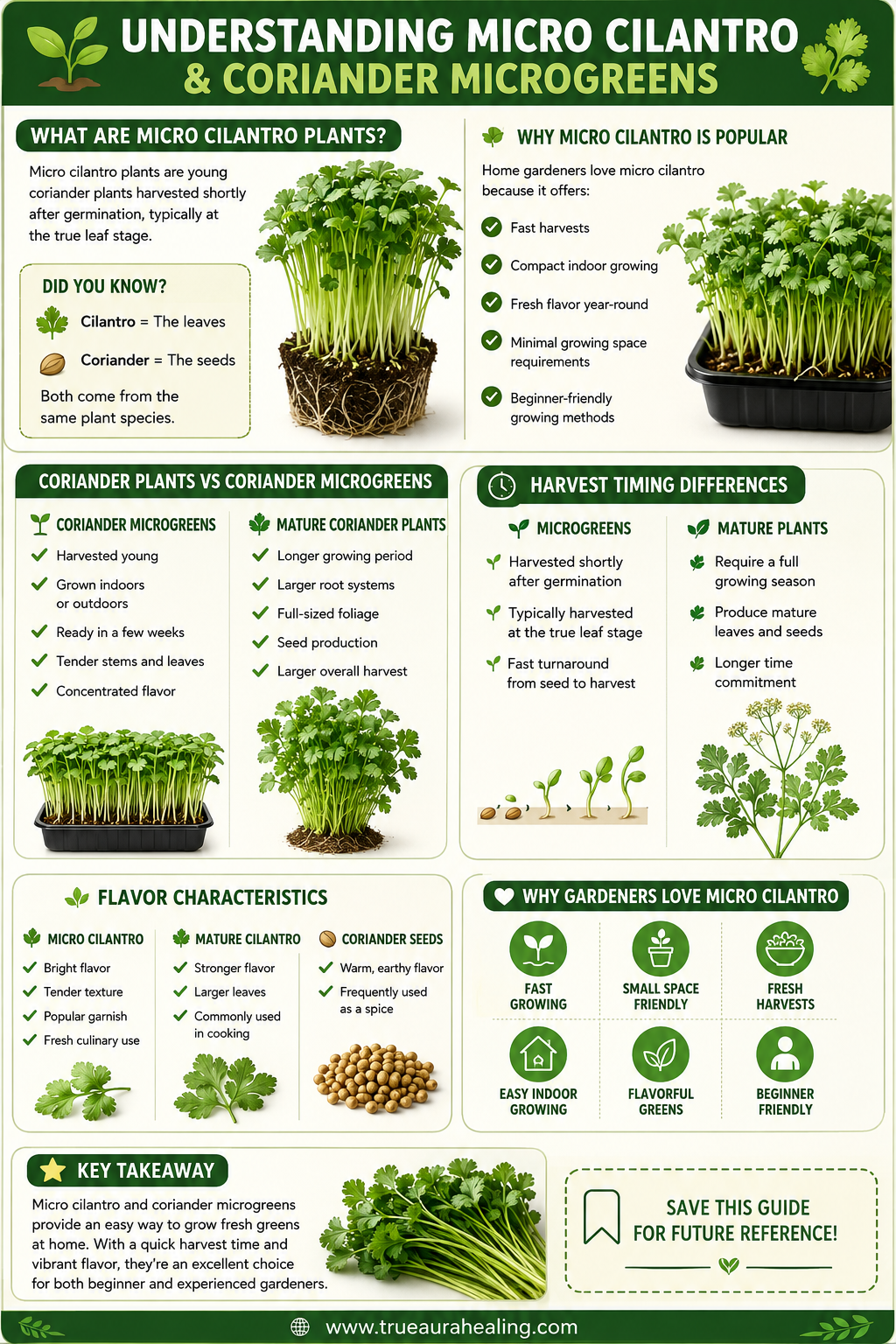
Infographic explaining the differences between micro cilantro, coriander microgreens, and mature coriander plants, including growth stages, harvest timing, flavor characteristics, and benefits of growing micro cilantro at home.
Supplies You'll Need Before You Start
Having the right supplies can significantly improve your success when growing coriander microgreens at home. A shallow growing tray paired with a bottom tray helps support proper drainage and makes watering easier throughout the growing process. Many growers prefer coconut coir as a growing medium because it retains moisture well while providing a favorable environment for germination, though other growing mediums can also be effective. Starting with high-quality coriander seeds, including properly prepared split seeds, can help improve germination rates and encourage more uniform growth.
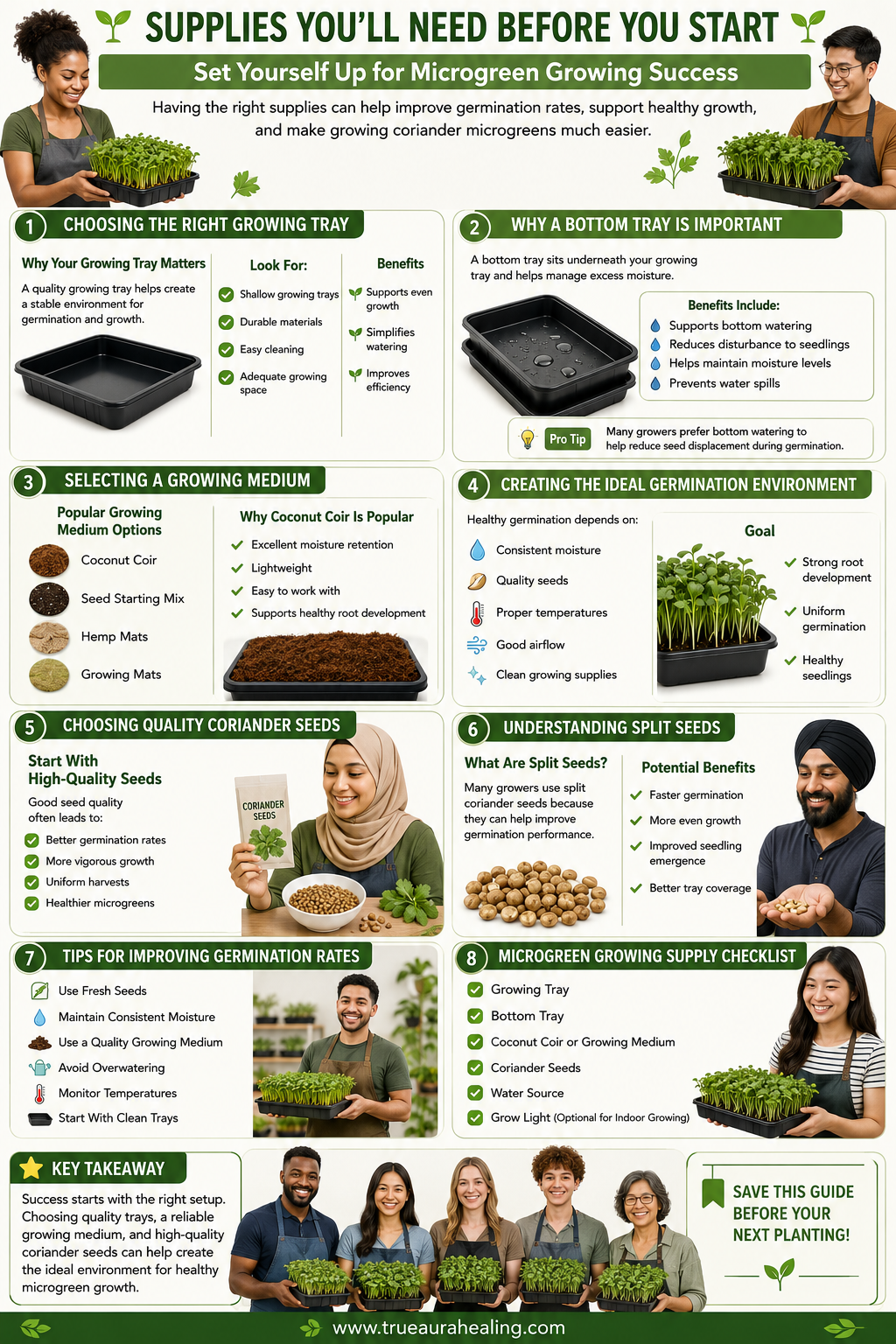
Infographic showing the essential supplies needed to grow coriander microgreens, including growing trays, bottom trays, coconut coir, growing mediums, coriander seeds, split seeds, and tools that support healthy germination and growth.
Preparing Your Growing Tray
Proper tray preparation helps create the ideal environment for healthy microgreen growth and strong root development. Start by placing your growing tray inside a bottom tray, which will help manage moisture and support bottom watering throughout the growing process. Next, add a moistened layer of coconut coir or your preferred growing medium, ensuring it is evenly distributed and damp but not waterlogged before sowing seeds. When watering, aim to maintain consistent moisture levels while avoiding overwatering, as excessive moisture can reduce airflow and negatively affect germination.
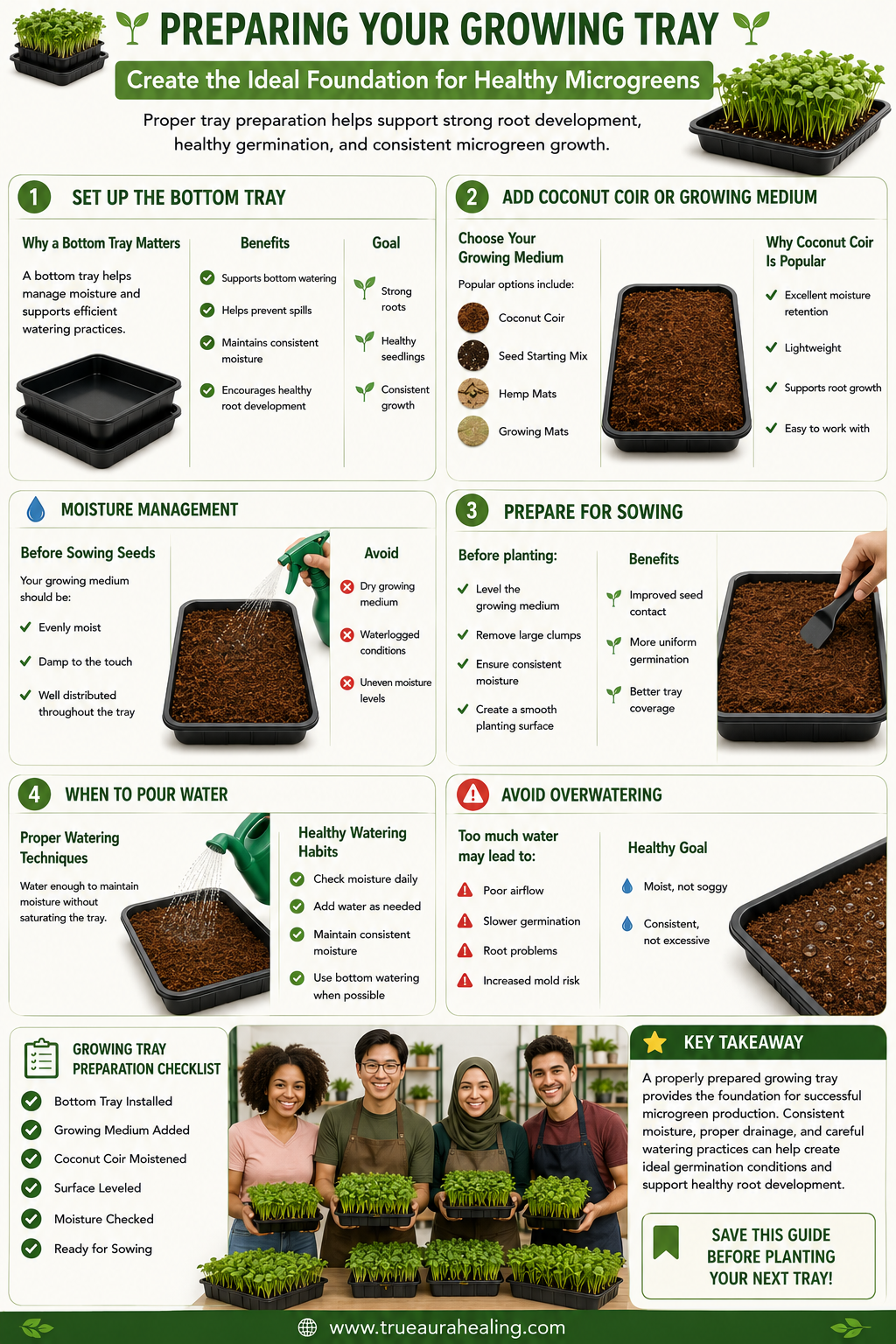
Step-by-step infographic demonstrating how to prepare a growing tray for microgreens using a bottom tray, coconut coir, proper moisture management, and watering techniques that support healthy root development and germination.
Planting Coriander Seeds
Planting coriander seeds correctly can improve germination rates and help create a more uniform microgreen harvest. Many growers use split seeds because separating the seed husk can help moisture reach the seed more easily, supporting faster and more consistent germination. When sowing, distribute seeds evenly across the growing medium to create good coverage while avoiding overcrowding, which can reduce airflow and increase the risk of mold. During germination, some growers cover the tray with a plastic bag or humidity dome to help retain moisture, though other covering methods can also be effective for maintaining a stable environment until seedlings emerge.
Germination and Early Growth
Successful germination depends on several factors, including seed quality, consistent moisture, proper airflow, and favorable temperatures. Common mistakes such as overwatering, allowing the growing medium to dry out, or overcrowding seeds can reduce germination rates and lead to uneven growth. As seedlings emerge, seed hulls may remain attached to the leaves, especially when humidity levels are low or moisture is inconsistent; lightly misting the tray can often help loosen stubborn hulls. Cooler temperatures are generally preferred during germination because they help create stable growing conditions and support healthy, uniform seedling development.
Providing Light for Healthy Growth
Once your coriander microgreens have germinated, they will need adequate light to support healthy growth and prevent stretching. A grow light provides a reliable source of light for indoor growing and should be positioned close enough to the seedlings to encourage sturdy stems without causing heat stress. If natural sunlight is limited, supplemental lighting can help ensure consistent growth throughout the day. Providing sufficient light during the early stages helps prevent leggy growth and encourages stronger, healthier microgreens.
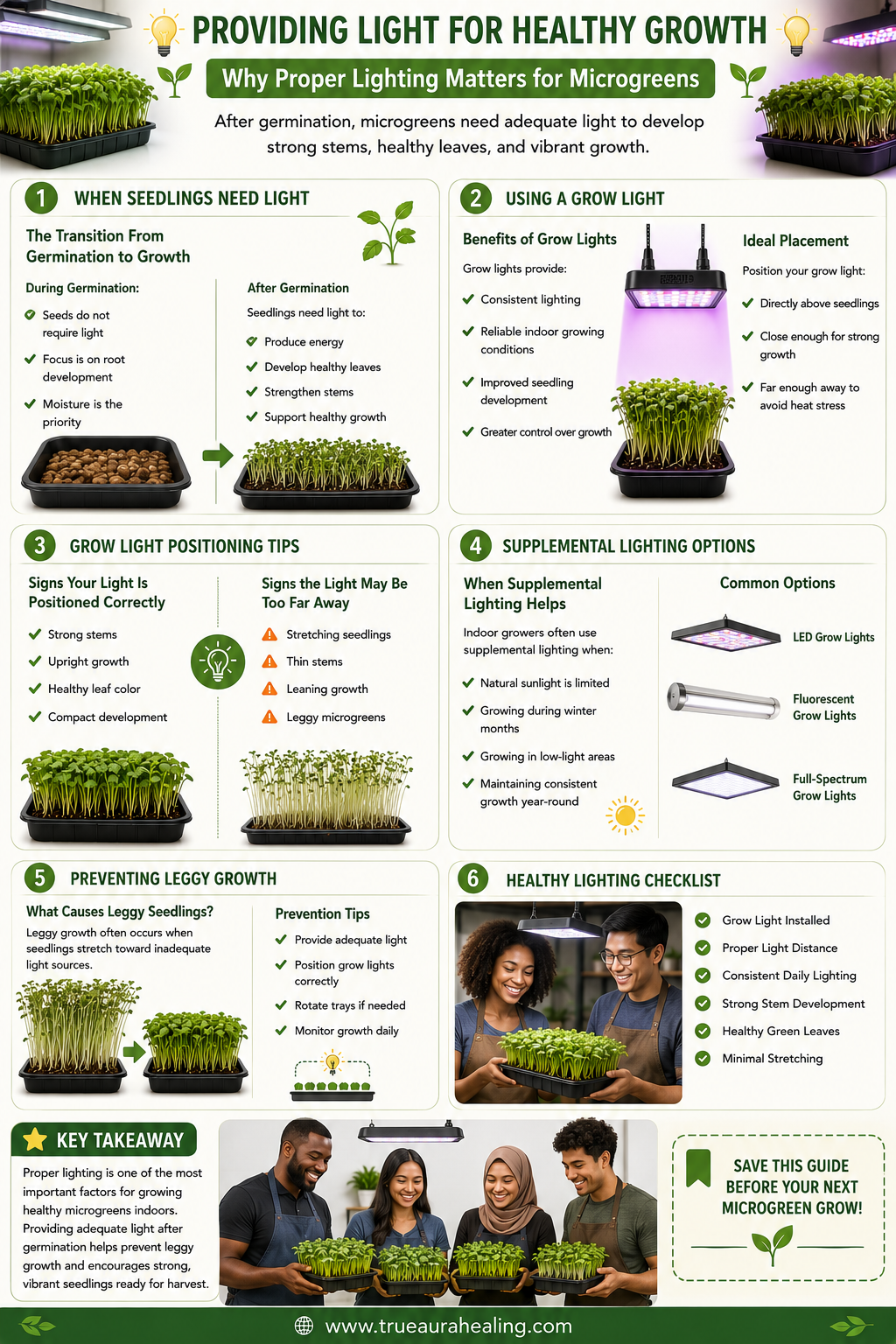
Infographic explaining how grow lights support healthy microgreen growth, including proper light placement, supplemental lighting options, prevention of leggy seedlings, and signs of healthy seedling development.
Monitoring Growth Stages
As your coriander microgreens grow, one of the most important milestones is the appearance of the first true leaves. Unlike the initial seed leaves that emerge during germination, true leaves more closely resemble the mature plant and indicate that the seedlings are developing properly. Healthy growth is typically characterized by upright stems, vibrant green leaves, and consistent development across the tray. Once most of the microgreens have reached the true leaf stage, they are usually ready for harvest and can provide the best balance of flavor, texture, and appearance.
Common Problems and Solutions
Even with proper care, growers may occasionally encounter challenges during the microgreen growing process. Low germination rates can result from poor seed quality, inconsistent moisture, improper temperatures, or overcrowding, but these issues can often be improved by adjusting growing conditions and using fresh seeds. Seed hulls may remain attached to emerging seedlings when humidity is low or moisture levels fluctuate, though gentle misting can help loosen stubborn hulls. Maintaining the right balance of light and moisture is also essential, as too little light can cause leggy growth while excessive watering may increase the risk of mold and poor root development.
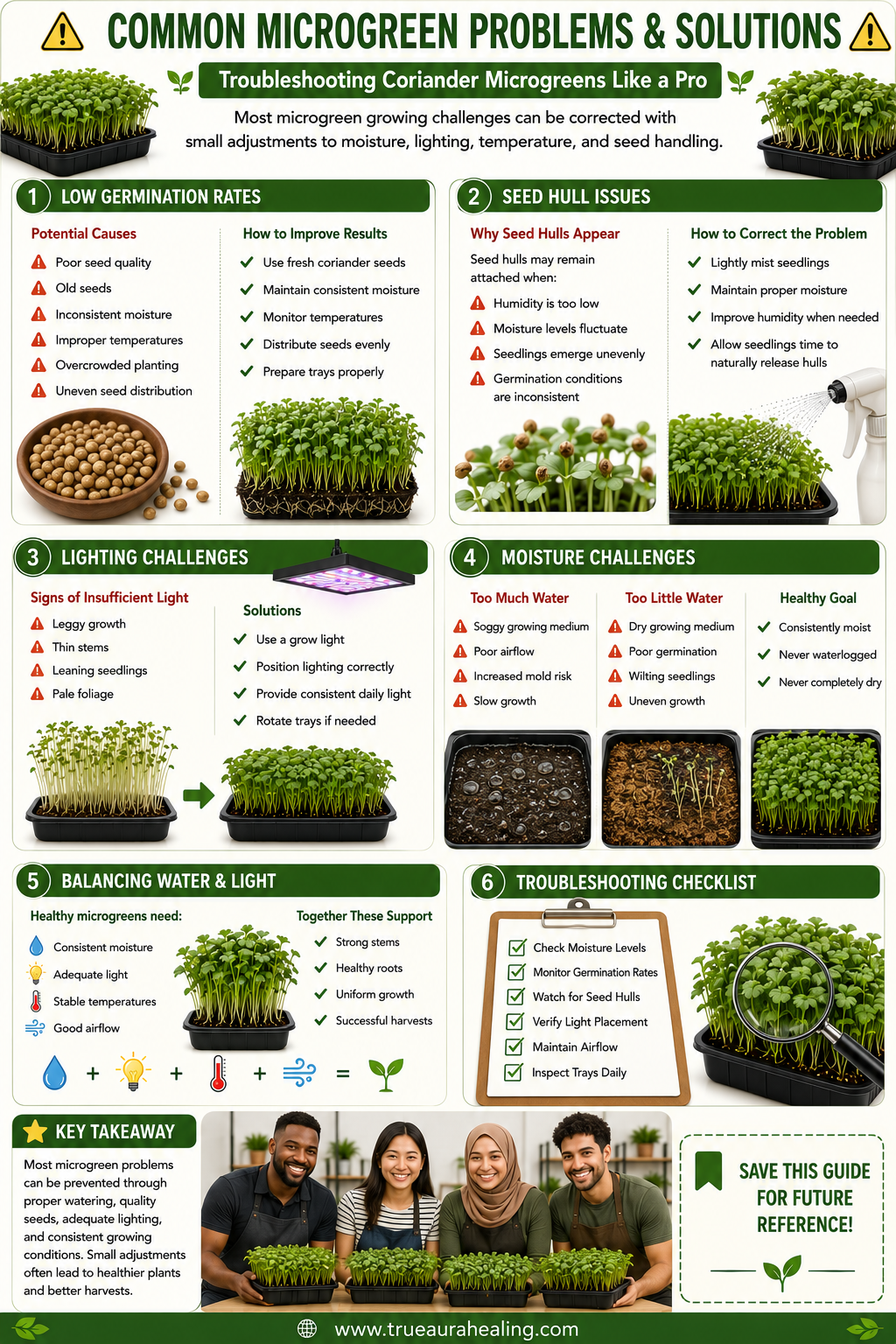
Troubleshooting infographic for coriander microgreens covering low germination rates, seed hull issues, lighting challenges, moisture problems, and practical solutions to improve growth and harvest success.
Harvesting Micro Cilantro
Harvesting micro cilantro at the right time helps maximize flavor, texture, and overall quality. Most growers harvest once the majority of the microgreens have reached the true leaf stage, which indicates the plants have developed beyond their initial seed leaves and are ready for use. Use clean scissors or a sharp knife to cut the microgreens just above the growing medium, taking care not to damage the harvest. To preserve freshness, store harvested microgreens in a clean container in the refrigerator and avoid excess moisture, which can shorten their shelf life.
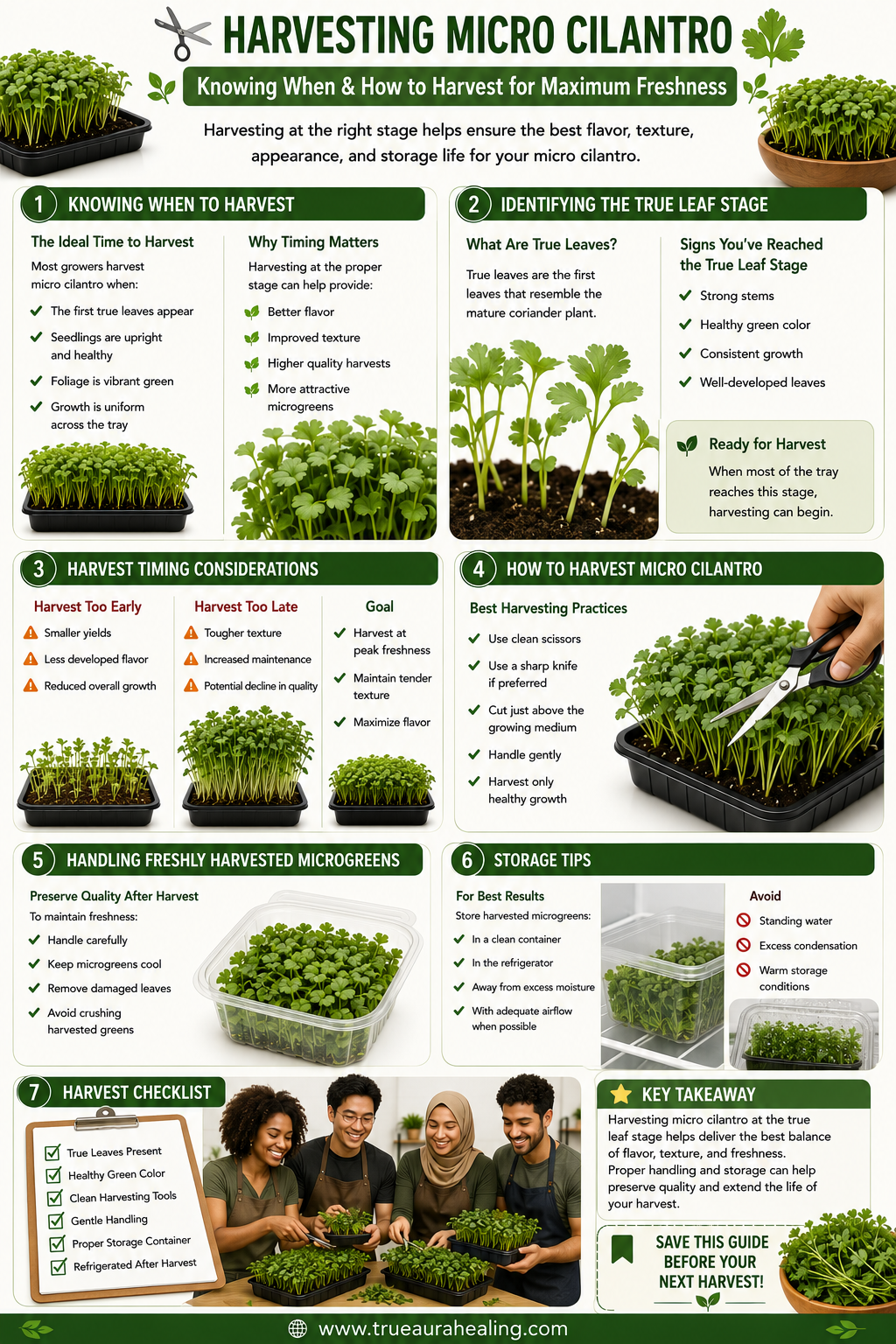
Infographic showing when and how to harvest micro cilantro at the true leaf stage, including harvest timing, identifying healthy growth, proper harvesting techniques, storage tips, and maintaining freshness after harvest.
Why Growing Microgreens at Home Is Worth It
Growing microgreens at home offers a convenient way to enjoy fresh greens without making frequent trips to the grocery store. Because microgreens require minimal space and can be grown indoors year-round, they provide a reliable source of homegrown produce regardless of the season. Many gardeners find that growing their own microgreens can help reduce the cost of purchasing specialty greens while ensuring a consistent supply of fresh harvests. As your confidence grows, it's easy to scale production by adding additional trays and creating a continuous indoor harvest cycle.
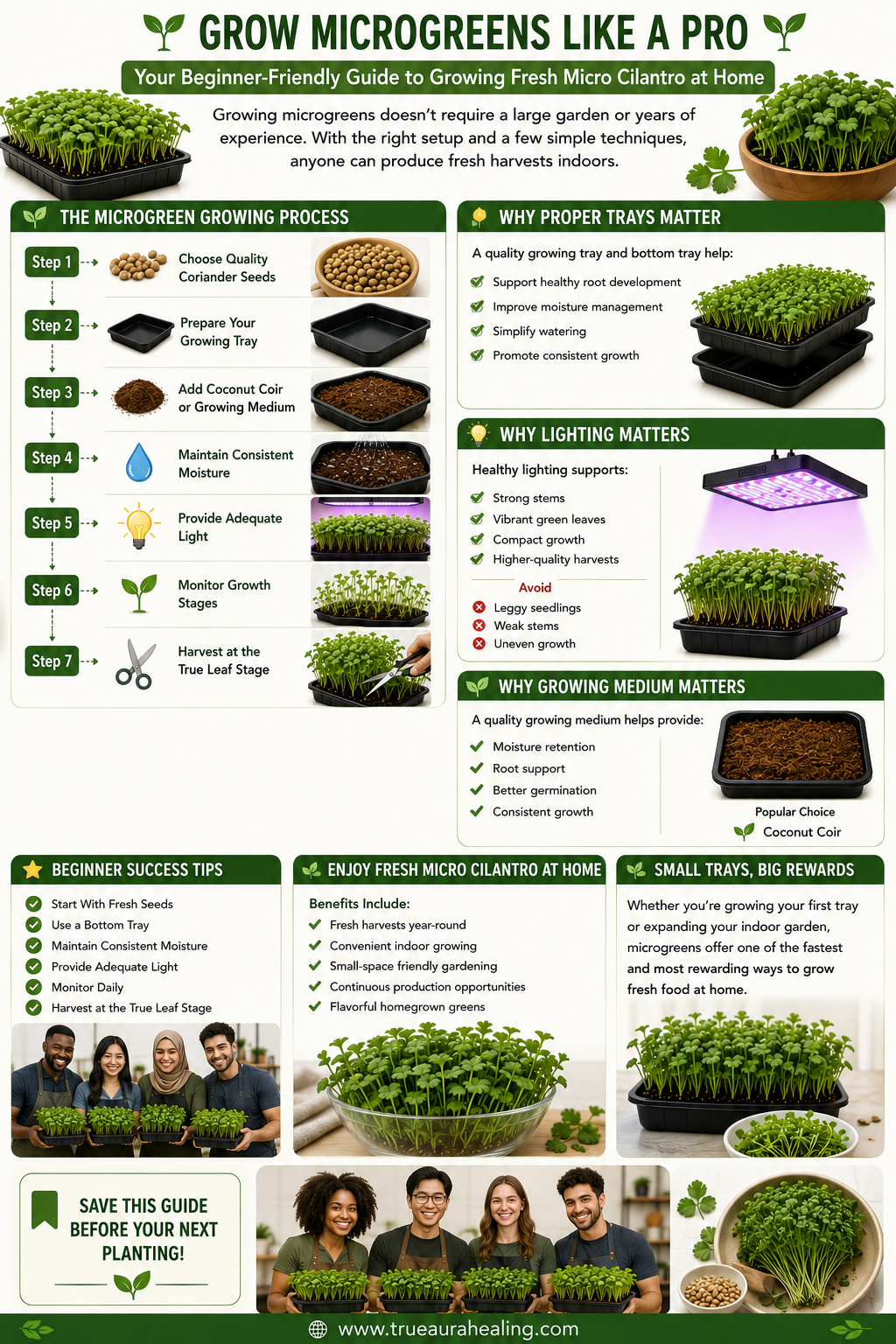
Beginner-friendly infographic outlining the complete process of growing micro cilantro at home, from choosing coriander seeds and preparing trays to harvesting healthy microgreens and maintaining year-round indoor production.
Growing microgreens like a pro starts with understanding the basics of seed selection, tray preparation, moisture management, lighting, and harvest timing. Using the proper growing trays, a quality growing medium such as coconut coir, and adequate lighting can significantly improve germination rates and overall plant health. Even beginners can achieve successful harvests by following a few simple steps and maintaining consistent growing conditions throughout the process. With a little practice, you'll be able to enjoy fresh, flavorful micro cilantro harvests right from your home year-round.