

Growing Cantaloupe In North Texas Gardening Tips
Growing cantaloupe in north texas can be incredibly rewarding when the right conditions are in place. The region’s long, hot summers create an ideal environment for cantaloupe plants to thrive. However, success depends on understanding how climate, soil, and timing work together. Cantaloupe plants require warmth, sunlight, and consistent care throughout the growing season. With the right approach, even beginner gardeners can produce high-quality fruit.
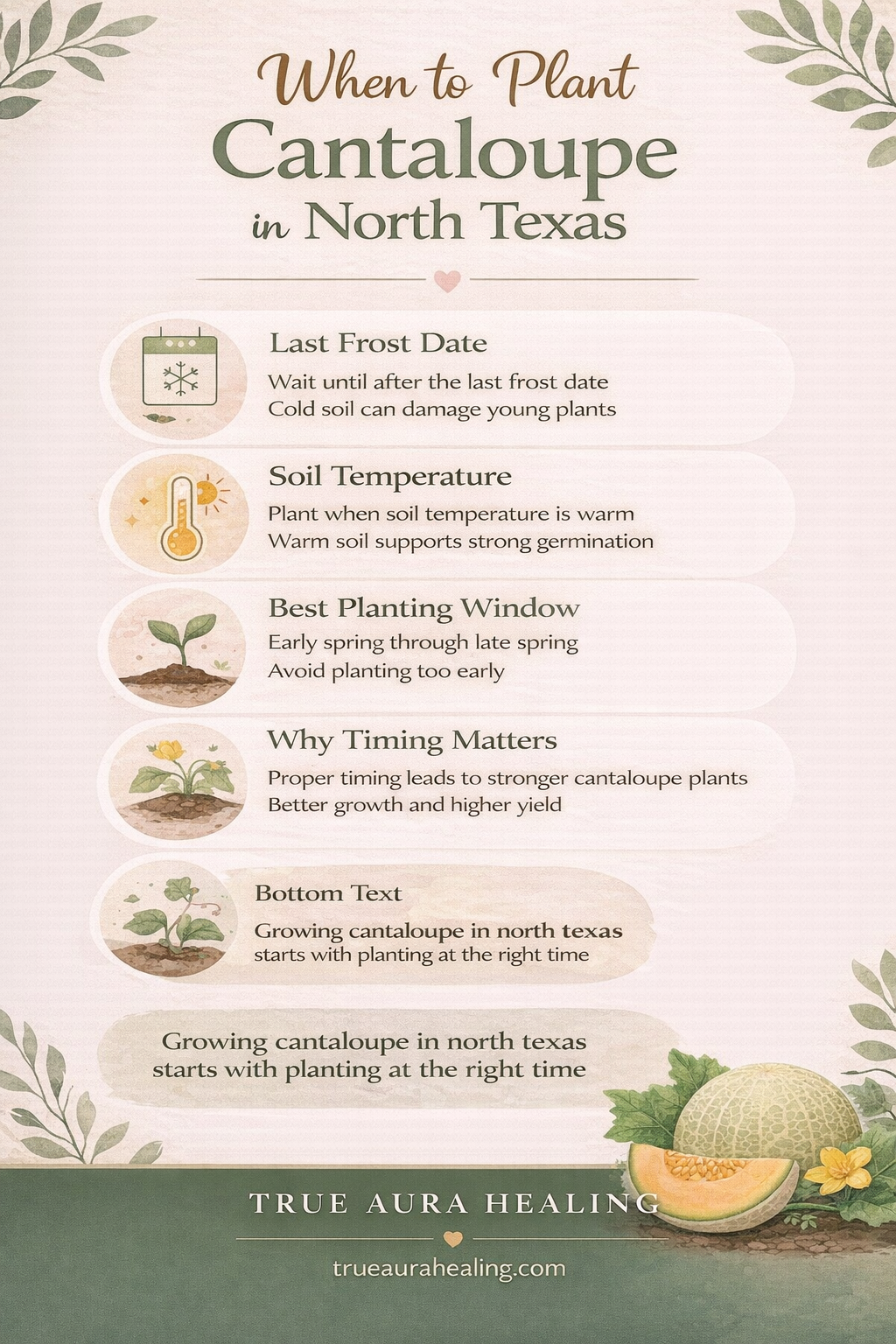
Infographic on when to plant cantaloupe in north texas, including last frost date, soil temperature, and best planting window for healthy cantaloupe plants.
When to Plant Cantaloupe in Texas
Knowing when to plant cantaloupe in texas is one of the most important steps for a successful harvest. Cantaloupe plants need warm soil to germinate and grow properly. Planting too early, before the last frost date, can damage or kill young plants. Soil temperature should be consistently warm before planting begins. Waiting for the right conditions helps ensure strong, healthy growth from the start.
Choosing the Right Location for Cantaloupe Plants
Cantaloupe plants require full sun to produce strong vines and sweet fruit. Choosing a location that receives consistent sunlight throughout the day is essential. These plants also need plenty of space to spread, as vines can grow several feet in length. Proper airflow around the plants helps reduce the risk of disease. A well-planned location sets the foundation for healthy plant development.
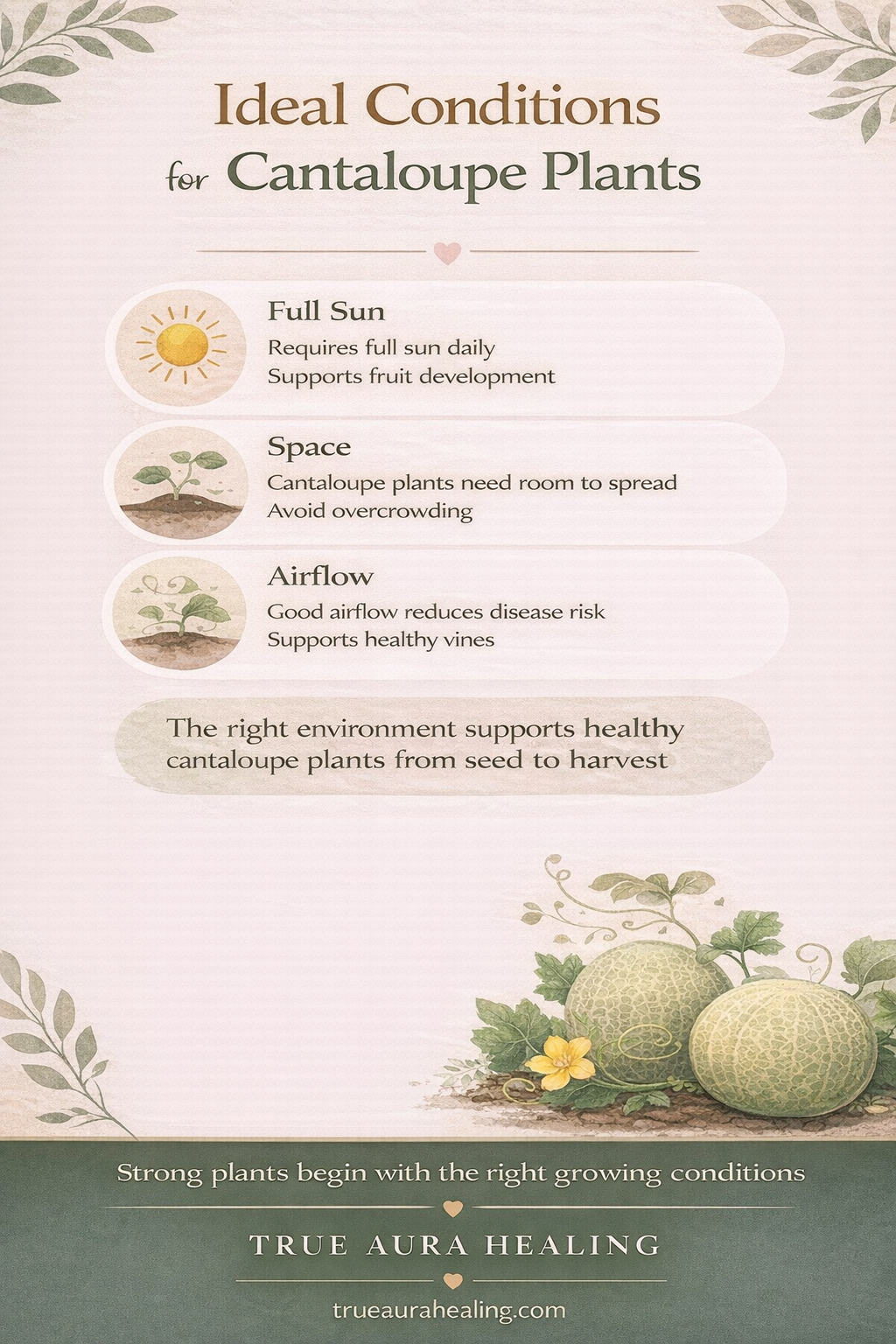
Infographic showing ideal conditions for cantaloupe plants, including full sun, proper spacing, and airflow to support healthy growth in north texas gardens.
Soil Preparation for Cantaloupe
Soil conditions play a major role in the success of cantaloupe plants. Well draining soil is essential to prevent root issues and promote steady growth. Adding organic matter can improve soil structure and support healthy root development. Nutrient-rich soil helps sustain the plant through each stage of growth. Preparing the soil properly before planting makes ongoing care much easier.
Planting Cantaloupe in North Texas
Planting cantaloupe can be done by direct sowing seeds or starting plants ahead of time. Cantaloupe seeds should be planted at the proper depth to encourage strong root development. Spacing is important to allow vines enough room to grow without overcrowding. After planting, consistent watering helps seeds establish quickly. A strong start leads to healthier plants throughout the season.
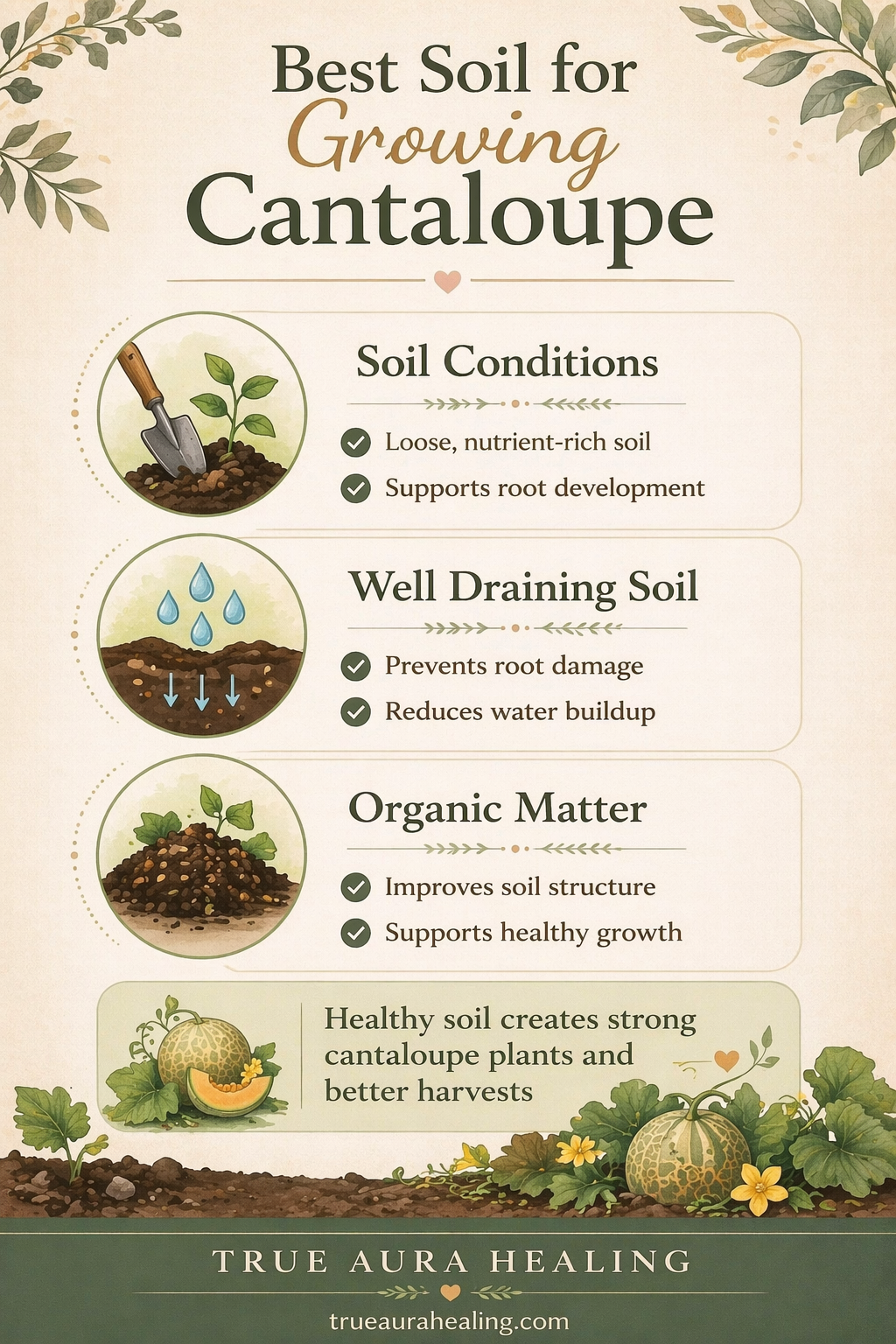
Infographic on best soil for growing cantaloupe, covering soil conditions, well draining soil, and organic matter to support strong root development and plant growth.
Watering and Care for Cantaloupe Plants
Cantaloupe plants require consistent watering, especially during early growth and fruit development. The north texas climate can be hot and dry, making moisture management essential. Overwatering should be avoided, as it can lead to root problems and reduced fruit quality. Supporting vine growth with proper spacing and care helps plants stay productive. Regular attention ensures steady and healthy development.
Fertilizing Cantaloupe Plants
Cantaloupe plants benefit from proper nutrition at each stage of growth. Fertilizing at the right time supports both vine development and fruit production. Balanced nutrients help the plant maintain strength throughout the growing season. As fruit begins to develop, nutrient needs may shift to support quality and size. Consistent feeding contributes to a more successful harvest.
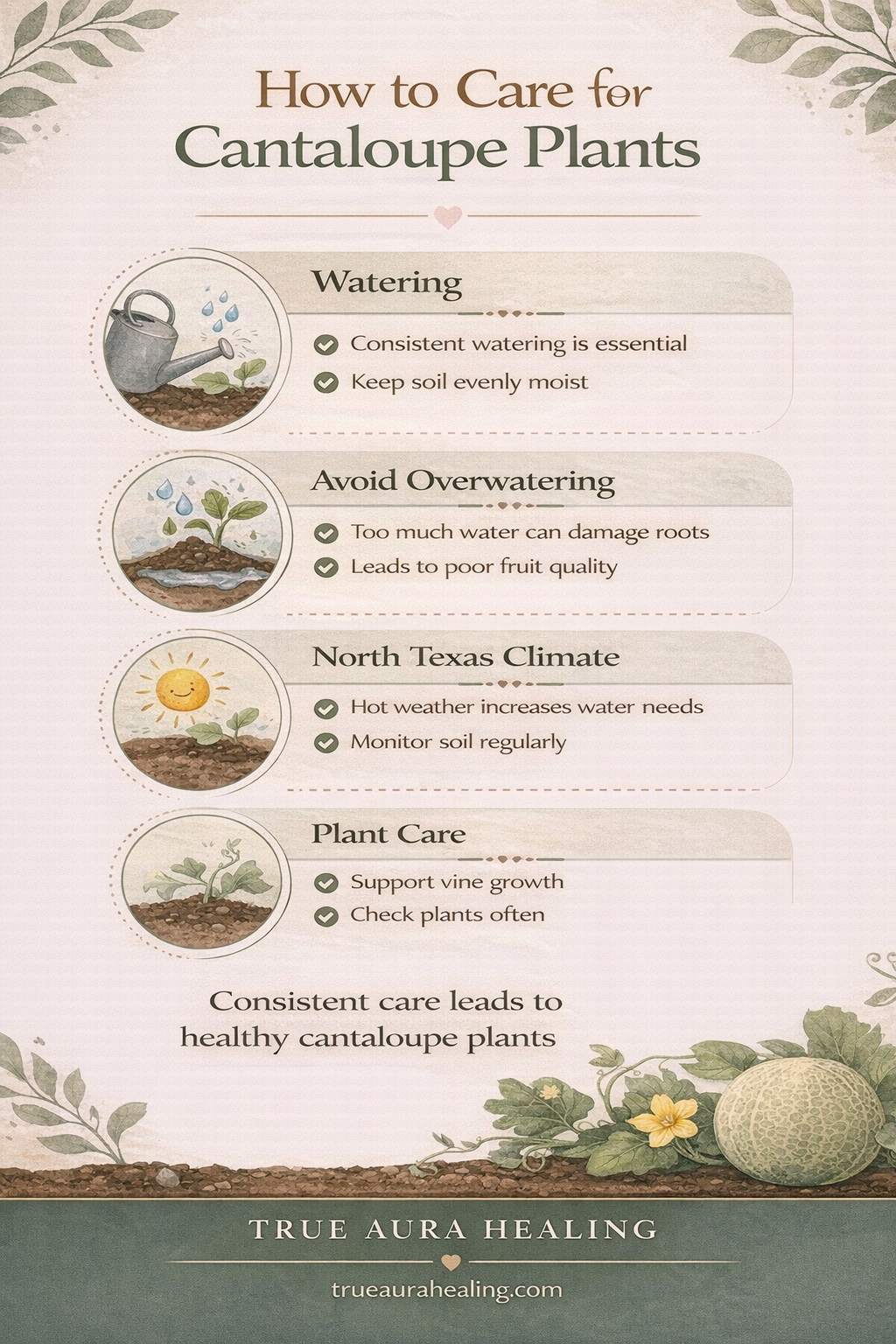
Infographic on how to care for cantaloupe plants with tips on watering, avoiding overwatering, and managing the north texas climate for healthy vines.
Common Problems When Growing Cantaloupe in North Texas
Cantaloupe plants can face challenges from pests and environmental stress. The north texas climate can increase the risk of certain plant diseases if conditions are not managed properly. Monitoring plants regularly helps catch issues early before they spread. Maintaining healthy soil and proper spacing can reduce many common problems. Prevention is often more effective than treatment.
Harvesting Cantaloupe
Knowing when cantaloupe is ready to harvest ensures the best flavor and texture. Ripe cantaloupe often shows visible signs that indicate it is ready to be picked. In north texas, timing can vary depending on planting conditions and weather. Harvesting at the right time prevents fruit from becoming overripe. Proper handling after harvest helps maintain quality.
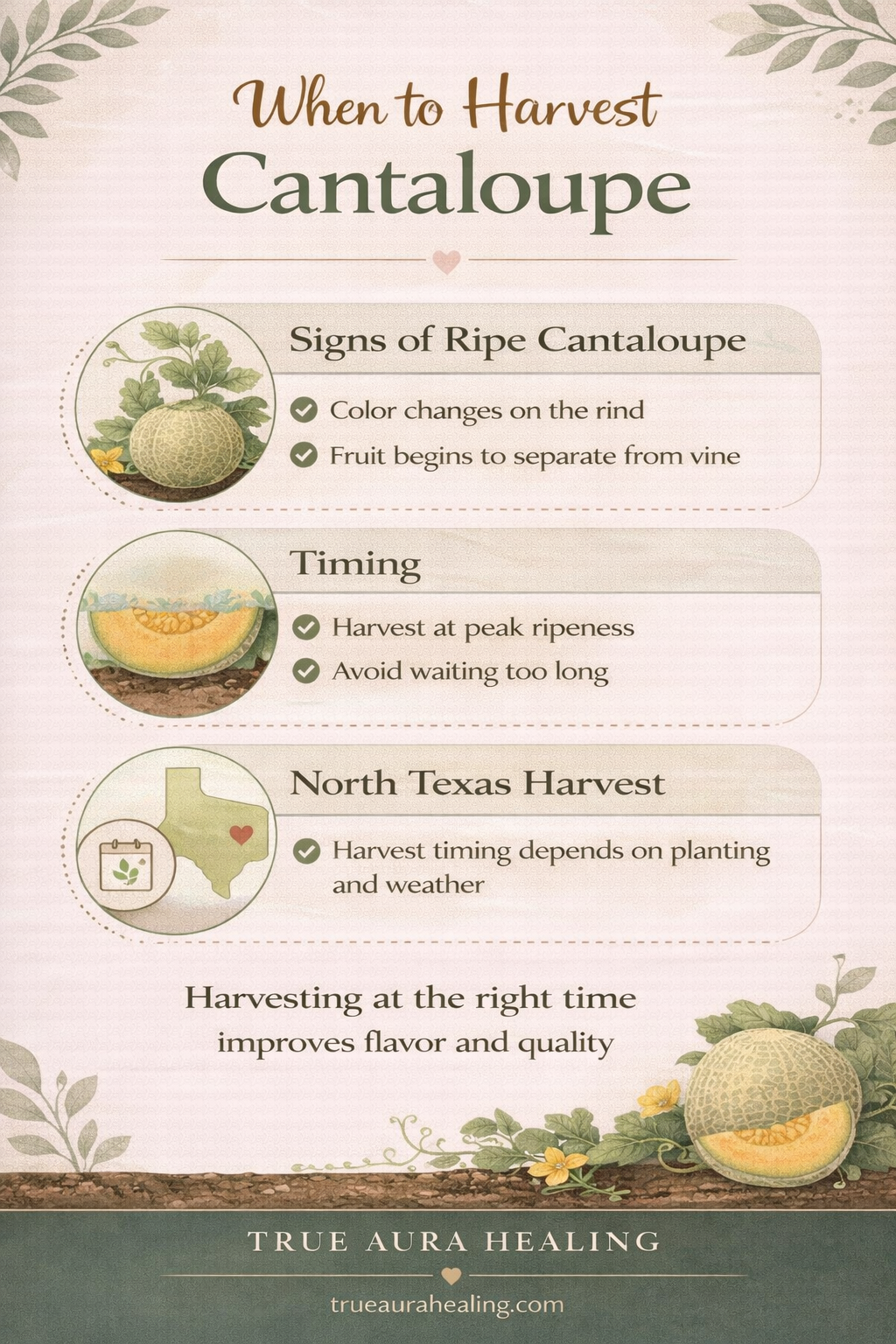
Infographic on when to harvest cantaloupe, including signs of ripe cantaloupe, timing tips, and north texas harvest conditions for best flavor and quality.
Final Tips for Growing Cantaloupe in North Texas
Growing cantaloupe in north texas becomes easier with experience and consistency. Paying attention to soil, sunlight, and watering can make a noticeable difference in results. Each growing season provides an opportunity to refine your approach. With patience and observation, gardeners can improve both yield and quality. Cantaloupe plants reward steady care with fresh, homegrown fruit.