

How to prevent disease and care for elephant ear plant
Elephant ear plants are popular tropical plants known for their large, dramatic leaves and bold presence in gardens and landscapes. While these plants can grow quickly and create a lush, tropical look, they also have specific needs when it comes to light, moisture, temperature, and overall care. Understanding the unique growing requirements of elephant ears can help prevent common issues such as yellow leaves, root rot, and pest infestations. By focusing on disease prevention and proper plant care, gardeners can enjoy healthy growth and vibrant foliage throughout the growing season.
Understanding Elephant Ear Plants
Elephant ear plants are prized for their oversized leaves and striking tropical appearance, making them a favorite choice for gardeners looking to create a lush landscape. These plants thrive in warm environments and can grow rapidly during the growing season when provided with proper moisture, nutrients, and light. Healthy elephant ears regularly produce new growth, with fresh leaves emerging throughout the season. At the same time, it is normal for some older leaves to yellow and decline as the plant directs energy toward new foliage. Understanding these natural growth habits can help gardeners distinguish between normal aging and potential plant health concerns.
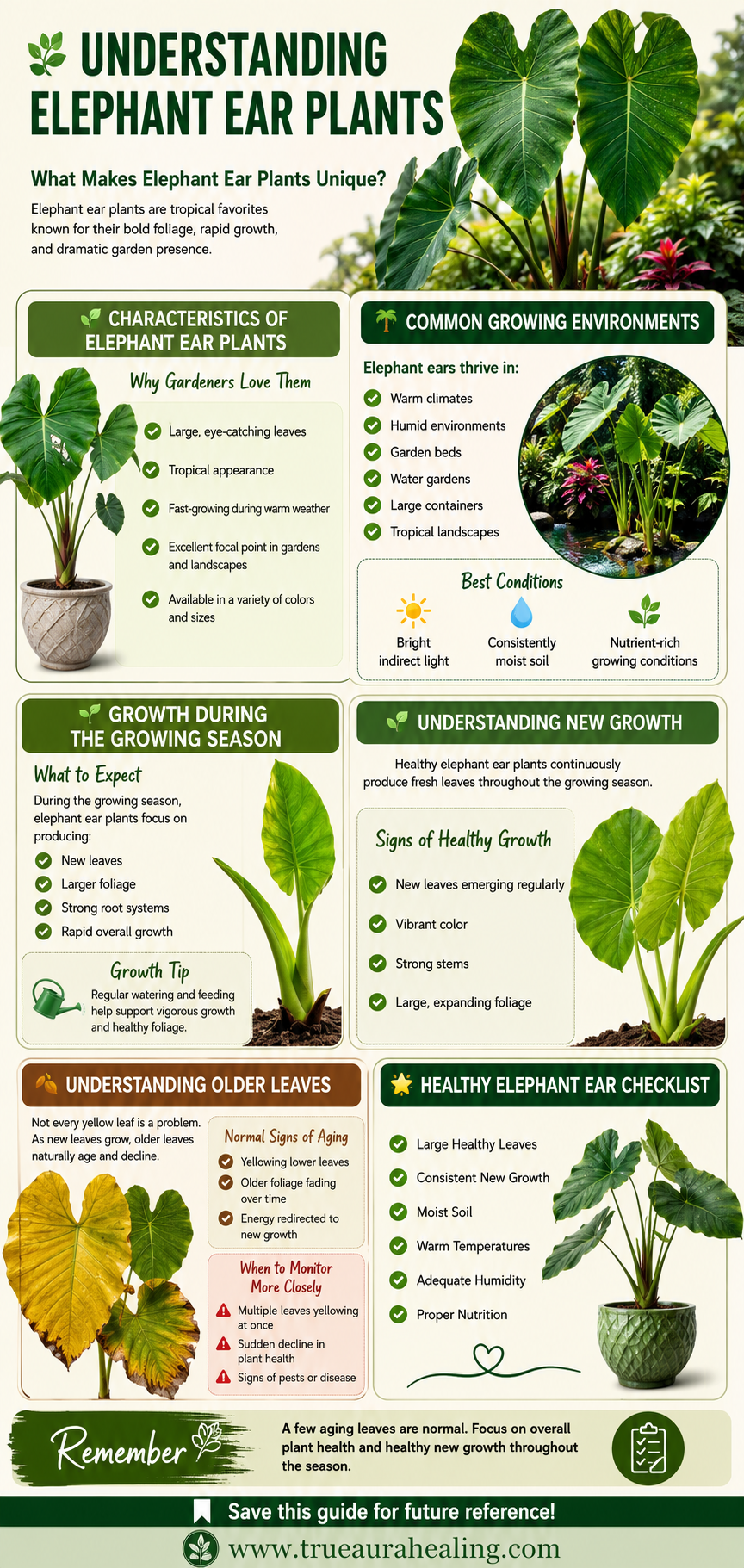
Learn everything you need to know about elephant ear plants, including their unique characteristics, growing requirements, and seasonal growth habits. This infographic explains how elephant ears develop throughout the growing season, what healthy new growth looks like, and how to distinguish normal aging leaves from potential plant health concerns. Perfect for gardeners growing elephant ear plants in tropical landscapes, containers, or garden beds.
Creating the Ideal Growing Conditions
Providing the right growing conditions is one of the best ways to keep elephant ear plants healthy and thriving. These tropical plants prefer bright indirect light, as excessive sun exposure can scorch their large leaves and reduce overall foliage quality. Elephant ears grow best in consistently moist soil, but it is important to avoid overwatering by choosing a planting location with good drainage and containers that have drainage holes. High humidity helps support lush growth, while protection from cold temperatures can prevent stress and leaf damage. By maintaining stable moisture, proper lighting, and a warm environment, gardeners can encourage healthy root systems and vibrant foliage throughout the growing season.
Common Signs of Plant Stress
Yellow or brown leaves are often one of the first signs that an elephant ear plant is experiencing stress. Yellow leaves can result from environmental factors such as overwatering, poor drainage, nutrient deficiencies, or natural aging, while brown leaves are often linked to moisture imbalances, low humidity, excessive sunlight, or temperature stress. It is important to remember that older leaves naturally decline as the plant produces healthy new growth throughout the growing season. Pruning aging or damaged leaves can improve the plant's appearance and help direct energy toward developing fresh foliage.
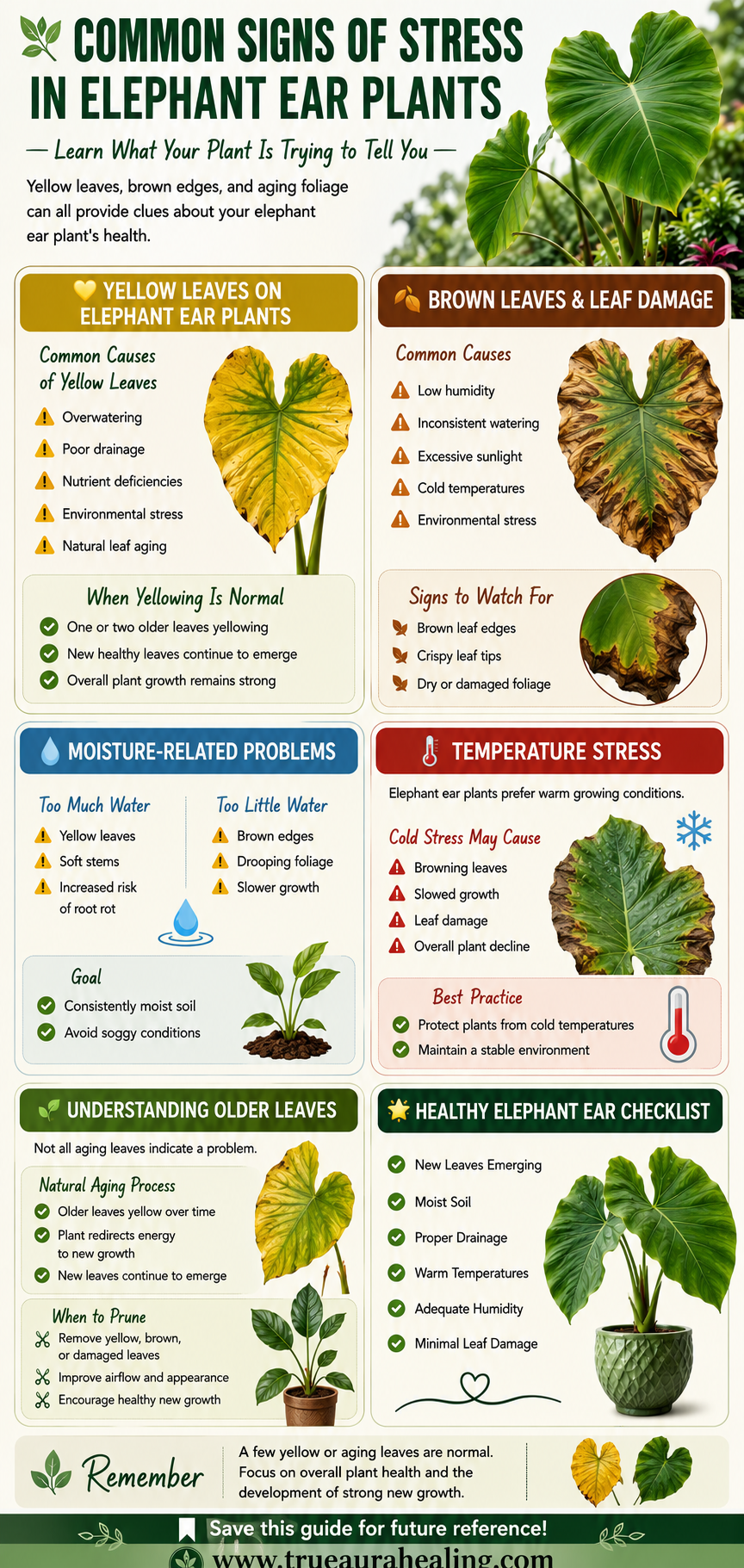
Discover how to identify common signs of stress in elephant ear plants, including yellow leaves, brown leaves, leaf damage, moisture issues, and temperature stress. Learn the difference between normal leaf aging and warning signs that may indicate overwatering, poor drainage, nutrient deficiencies, or environmental stress. A helpful guide for diagnosing elephant ear plant problems early.
Common Diseases Affecting Elephant Ear Plants
Root rot is one of the most common diseases affecting elephant ear plants and is typically caused by excessive moisture, poor drainage, or consistently waterlogged soil. Early warning signs may include yellowing leaves, wilting despite wet soil, soft stems, and a decline in overall plant vigor. Preventing root problems starts with proper care, including using well-draining soil, ensuring containers have drainage holes, and avoiding overwatering. Maintaining healthy growing conditions, following proper watering practices, and regularly monitoring plants throughout the growing season can significantly reduce the risk of disease and help keep elephant ear plants healthy and thriving.
Common Pests and How to Prevent Them
Spider mites are one of the most common pests that can affect elephant ear plants, especially during hot, dry conditions. These tiny pests are often found on the undersides of leaves and may cause yellow speckling, discoloration, webbing, or a decline in overall plant health. Regularly inspecting leaves can help gardeners identify infestations early before significant damage occurs. Maintaining proper humidity, keeping plants healthy, and monitoring foliage throughout the growing season are effective ways to help prevent spider mite problems. Consistent plant monitoring allows issues to be addressed quickly, supporting long-term plant health and vigorous growth.
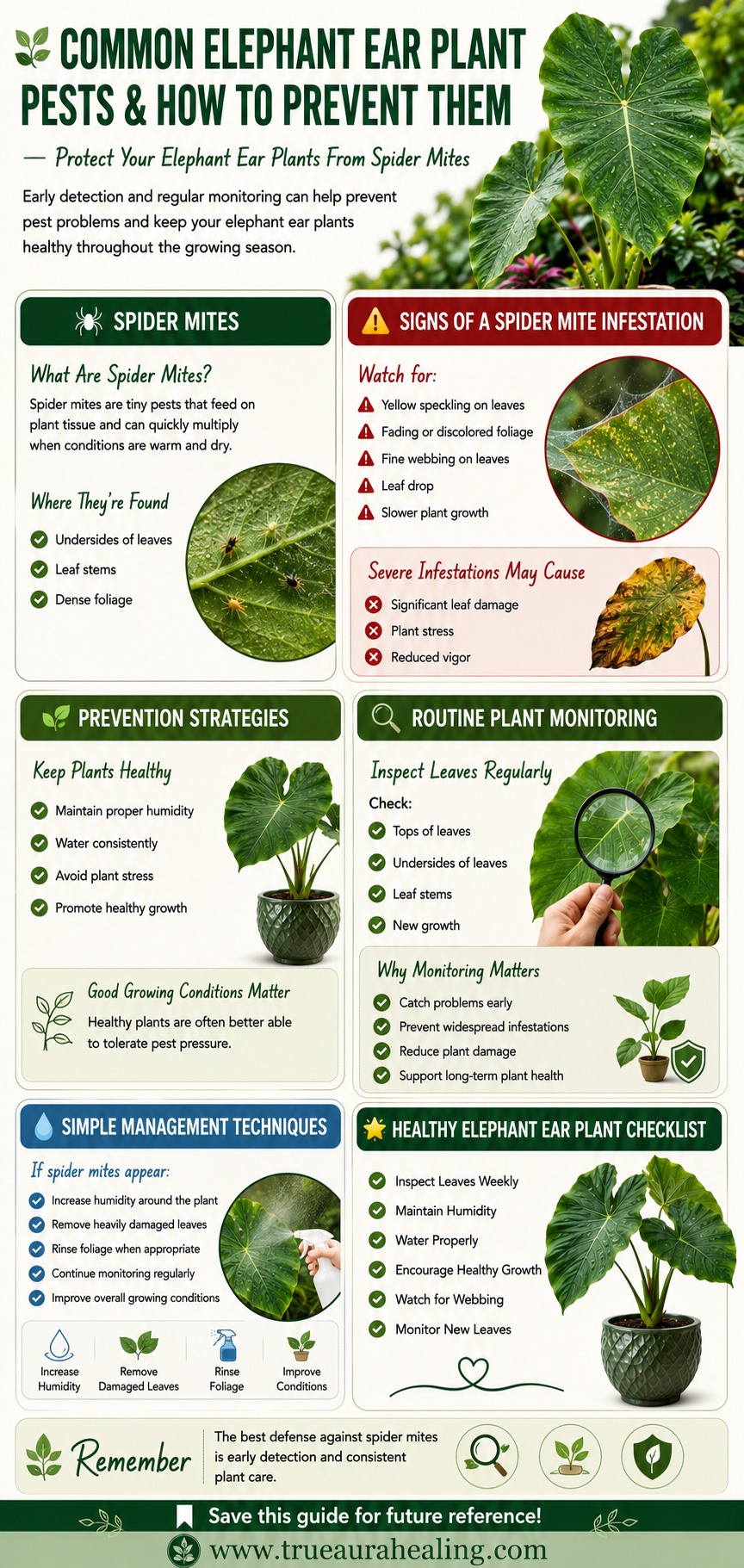
Learn how to identify, prevent, and manage spider mites on elephant ear plants. This infographic covers the signs of spider mite infestations, including yellow speckling, webbing, leaf damage, and reduced plant vigor, while providing prevention strategies and routine monitoring tips to support healthy plant growth.
Seasonal Care for Elephant Ear Plants
Elephant ear plants require consistent care throughout the growing season to support their rapid growth and impressive foliage. Regular watering, nutrient-rich soil, and routine feeding can help encourage healthy development, while monitoring soil conditions helps prevent problems related to overwatering or drought stress. As temperatures begin to cool, it is important to watch for signs of cold damage, such as drooping leaves, browning foliage, or slowed growth. Making seasonal adjustments and preparing plants for changing weather can help protect elephant ears from temperature stress and support their long-term health year after year.
Quick Insights for Healthier Elephant Ear Plants
Keeping elephant ear plants healthy often comes down to consistent monitoring and simple routine care. Checking soil moisture regularly, watching for yellow or brown leaves, and inspecting foliage for spider mites can help identify potential problems before they become serious. Maintaining proper drainage and adequate humidity supports healthy roots and lush foliage while reducing plant stress. A quick daily and weekly care routine can go a long way toward promoting vigorous growth and preventing common plant health issues.
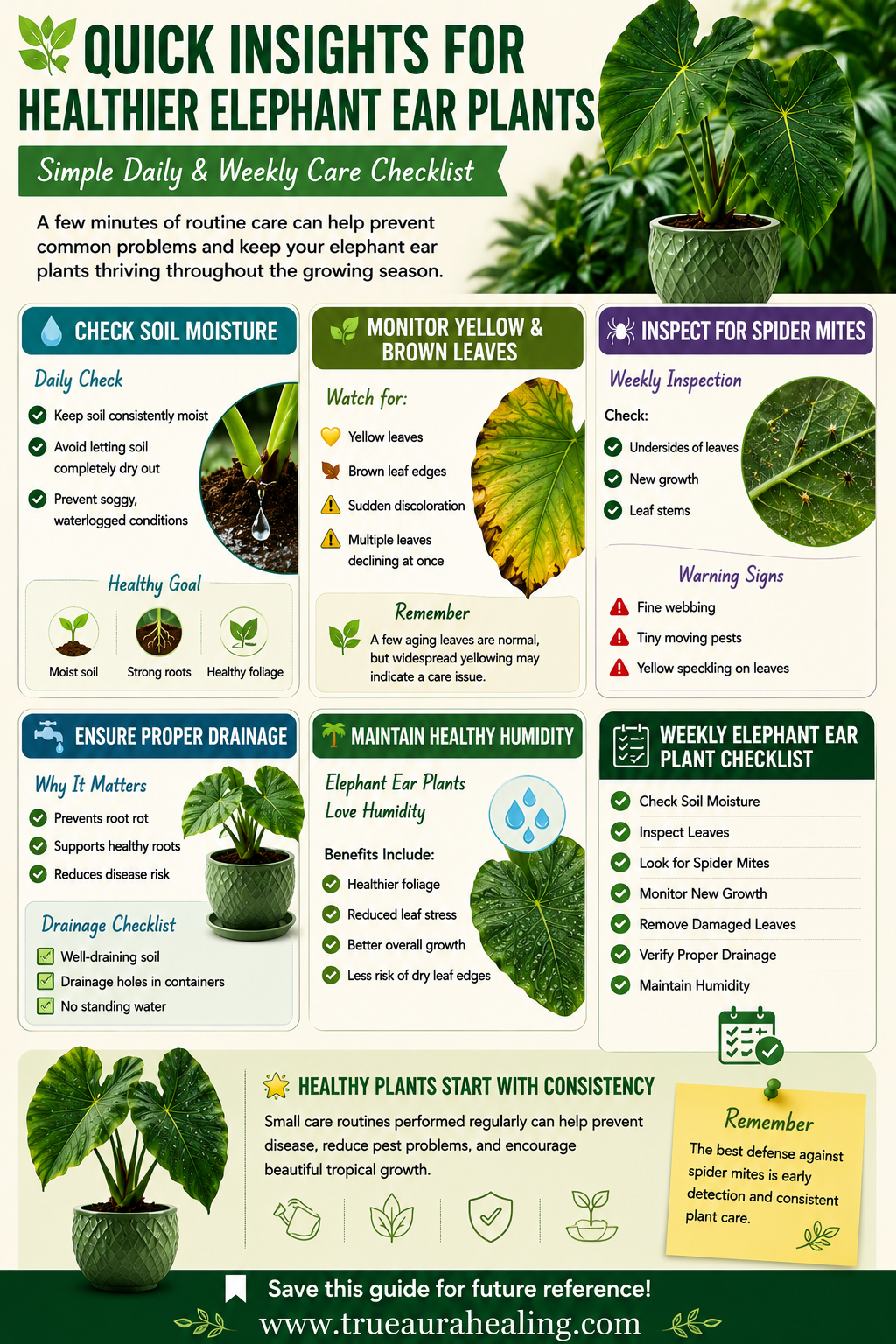
Keep elephant ear plants healthy with this simple daily and weekly care checklist. Learn how to manage soil moisture, monitor yellow and brown leaves, inspect for spider mites, maintain humidity, and ensure proper drainage. This practical elephant ear plant care guide helps gardeners prevent common problems and promote healthy tropical growth.
Keeping elephant ear plants healthy year-round starts with providing the right growing conditions and addressing potential problems before they become serious. Consistently moist soil, bright indirect light, proper drainage, and regular monitoring can help prevent many common diseases and pest issues. Taking time to inspect leaves, watch for signs of stress, and adjust care as the seasons change can support strong growth and long-term plant health. With a little attention and routine maintenance, gardeners can enjoy large leaves, vibrant foliage, and beautiful tropical plants throughout the growing season.