

TIPS For Preventing teeth staining From Herbal Teas
Herbal teas are a beloved beverage for many tea lovers due to their calming rituals and health benefits. However, frequent tea drinking can contribute to tea stains and changes in the color of your teeth over time. The presence of tannins and other plant-based compounds plays a major role in the staining effect. The good news is that there are effective ways to protect your tooth enamel while still enjoying your favorite tea.
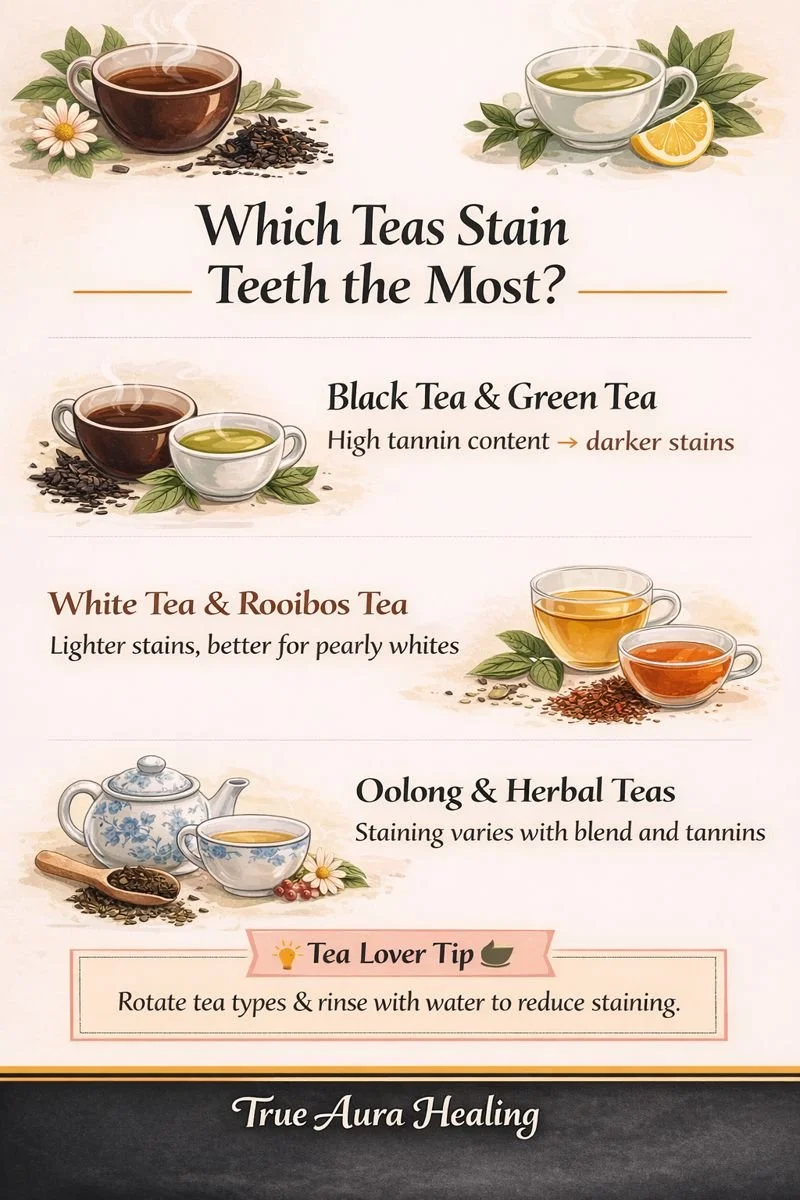
Wondering which teas stain teeth the most? This infographic breaks down how black tea and green tea with high tannin content cause darker tea stains, while white tea and rooibos tea are lighter options for protecting your smile. Learn how different blends affect staining and simple ways to reduce discoloration with smarter tea choices.
Why Herbal Teas Stain Teeth
Tea stains occur when natural compounds in tea bind to tooth enamel and create discoloration. Darker teas, especially those with a higher tannin content, are more likely to cause surface stains and deeper stains over time. Direct contact between tea pigments and dental enamel allows stains to settle, particularly when plaque buildup is present. While herbal teas may seem gentler than coffee or red wine, such herbal teas can still stain teeth depending on their composition.
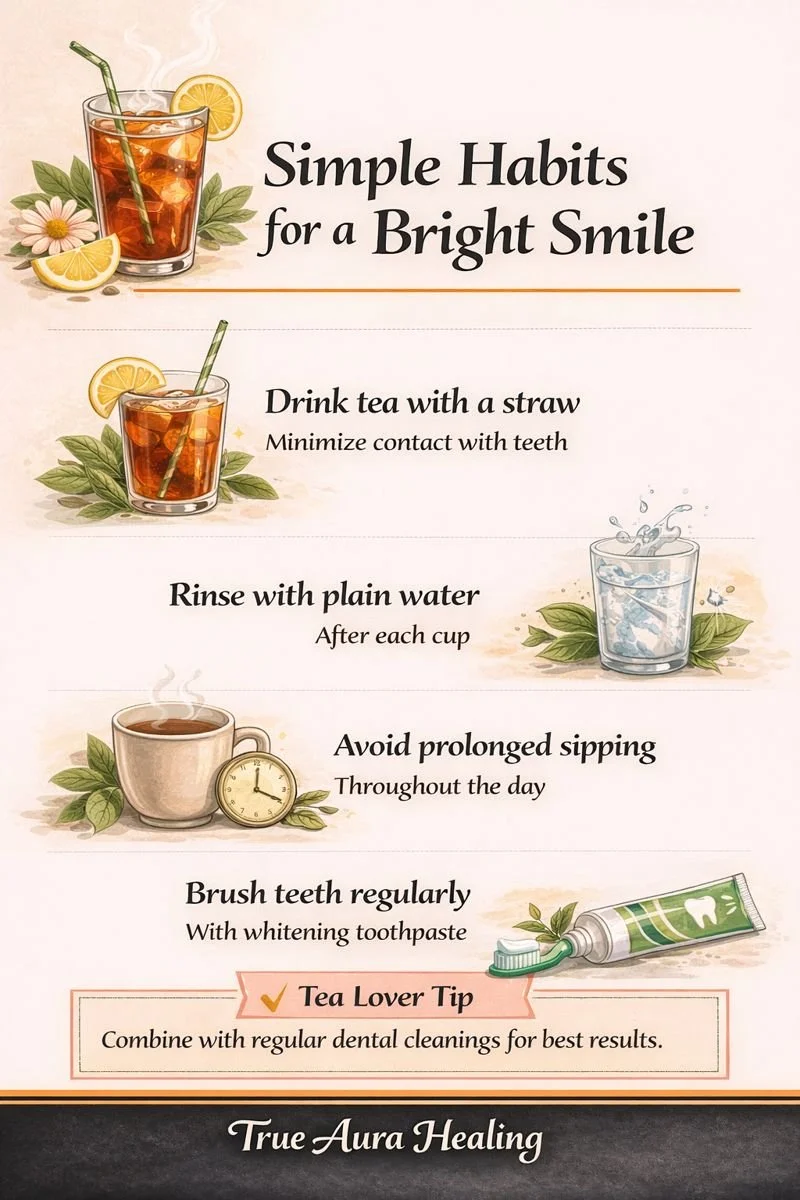
Love tea but want a brighter smile? These easy daily habits help prevent tea stains and teeth stains naturally. Learn why rinsing with plain water, avoiding prolonged sipping, and regular brushing with whitening toothpaste can make a big difference. Simple tips you can start today for healthier, whiter teeth.
Types of Teas and Their Staining Potential
Different types of tea affect teeth stains differently based on their tannin levels and color. Black tea is considered the worst offender due to its high amount of tannins and dark pigments. Green tea and oolong tea contain fewer tannins but can still lead to yellowish stains with regular consumption. White tea and lighter herbal teas, such as rooibos tea from South Africa, are often a better choice for tea drinkers concerned about maintaining pearly whites.
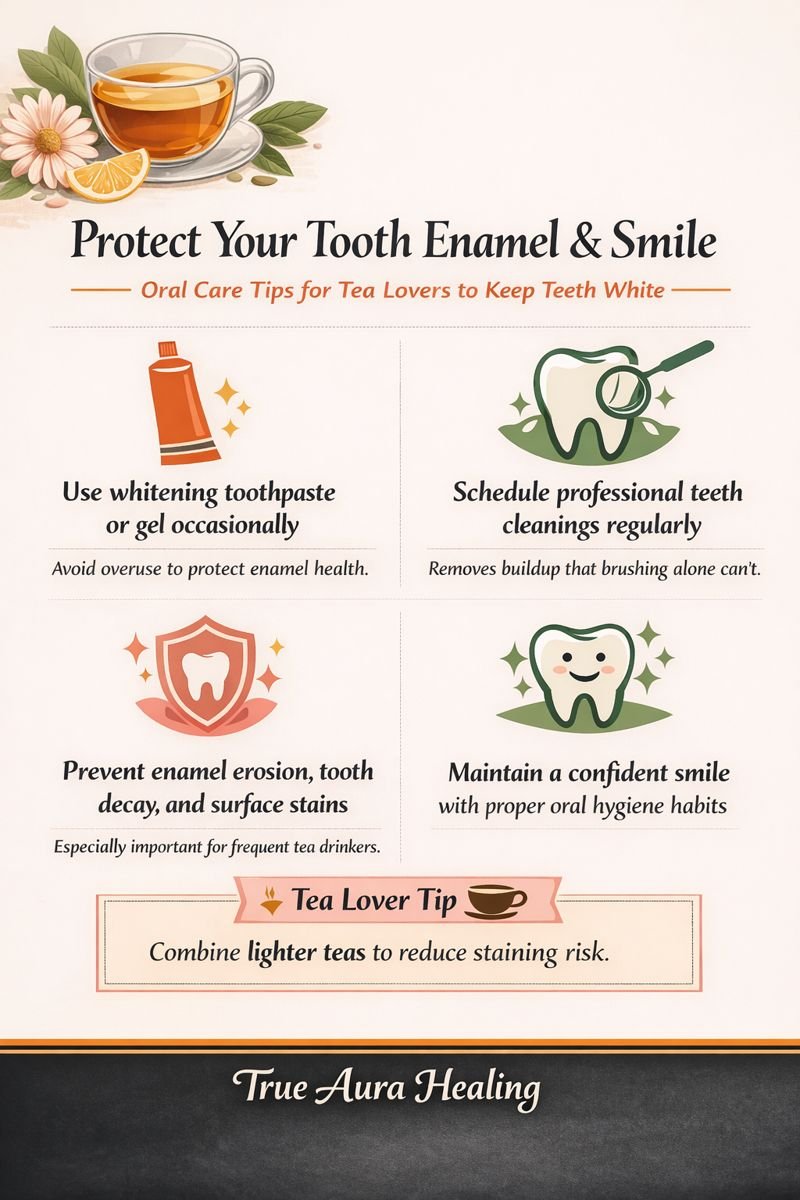
Tea lovers don’t have to choose between wellness and white teeth. This infographic shares essential oral care tips to protect tooth enamel, support dental health, and reduce surface stains. Learn when to use whitening products, why professional cleanings matter, and how proper hygiene keeps your smile confident.
Daily Habits to Prevent Tea Stains
Tannins are a type of polyphenol found in many teas and are responsible for both flavor and staining. A high tannin content increases the degree of staining by making tooth enamel more prone to absorbing pigments. Over time, this can weaken dental enamel and contribute to enamel erosion if oral hygiene habits are poor. Understanding the presence of tannins can help tea lovers choose lighter teas with fewer staining effects.
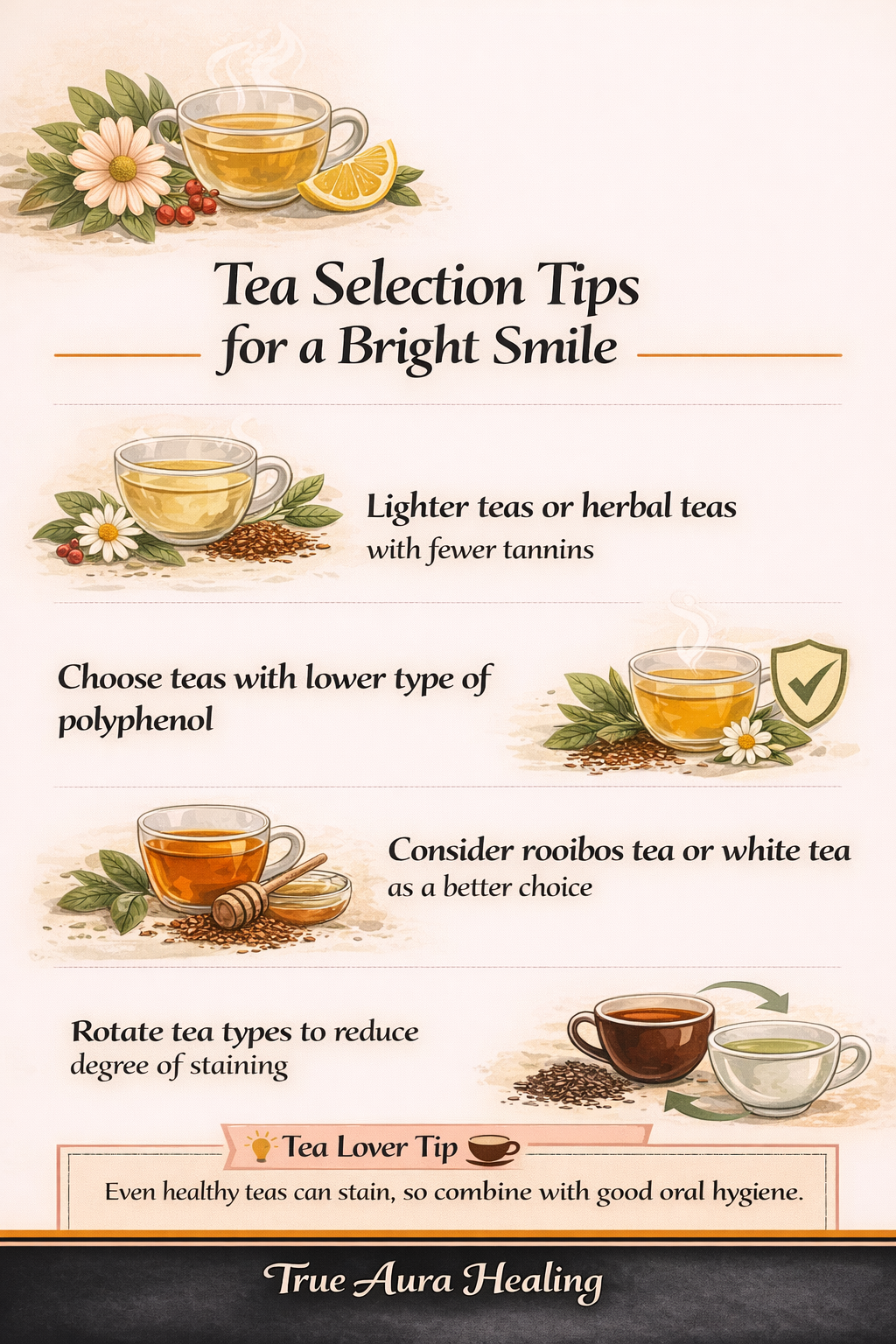
Not all teas stain teeth the same. Discover how choosing lighter teas, blends with fewer tannins, and options like rooibos tea or white tea can reduce the degree of staining. This guide explains how plant-based compounds like polyphenols affect your smile and how rotating tea types supports better oral health.
Oral Care Tips for Tea Drinkers
UseUsing a whitening toothpaste or whitening gel occasionally can help reduce surface stains caused by frequent tea drinking without damaging tooth enamel. Regular dental cleanings are essential for removing plaque buildup and preventing dull gray stains that brushing alone may miss. For deeper discoloration, professional whitening treatments can safely restore brightness while protecting dental enamel. Maintaining proper oral care also helps prevent tooth decay and enamel erosion, supporting long-term dental health. With consistent care, tea drinkers can enjoy their favorite beverage while maintaining pearly whites and a confident smile.
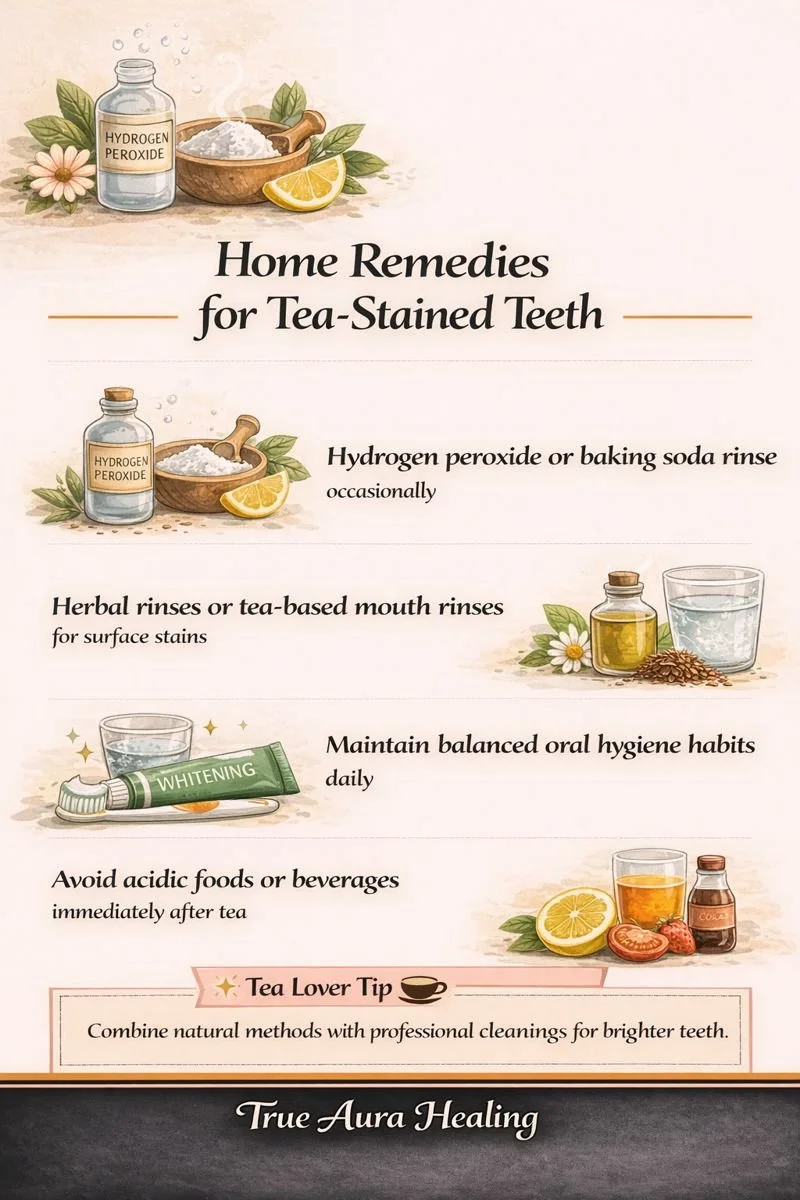
Looking for gentle, natural home remedies for tea-stained teeth? This infographic explores DIY methods using common ingredients to help reduce surface stains and yellowish stains while supporting balanced oral hygiene. Learn which habits to avoid, when to use natural compounds, and how to pair simple tips with professional cleanings.
Tea Selection Tips for Less Staining
Choosing lighter teas or lighter herbal teas with fewer tannins can significantly reduce the risk of tea stains while still offering health benefits. Many great options of teas contain lower levels of plant-based compounds, making them a better choice for preserving the color of your teeth. Rotating between different tea types can also help limit the degree of staining over time. For tea lovers concerned about discoloration, rooibos tea or white tea are excellent alternatives with naturally fewer tannins.
Tea stains are a common concern for many tea lovers, but they can be managed with the right habits and thoughtful tea choices. Protecting tooth enamel through regular brushing, professional cleanings, and good dental health practices plays a key role in maintaining a bright smile. Opting for lighter teas and rotating your favorite beverage can further reduce staining without sacrificing enjoyment. With proper care, tea lovers can continue enjoying their daily cup while keeping their teeth healthy and bright.