

Essential oils that help bone fracture recovery
Recovering from a bone fracture takes time as the body works through a complex healing process to repair and rebuild damaged bone tissue. While medical treatment remains the foundation of proper fracture care, many people explore natural healing approaches to support their overall wellness during recovery. Essential oils have been used traditionally for their soothing, anti-inflammatory, and aromatic properties, making them a popular complementary option for those seeking additional comfort. When used appropriately, essential oils may help support relaxation, promote a sense of well-being, and complement a comprehensive recovery plan.
Understanding Bone Fracture Recovery
When a bone breaks, the body immediately begins a healing process that involves inflammation, new tissue formation, and gradual bone remodeling. Specialized cells work together to create new bone tissue and restore strength to the affected area, but the speed of recovery can vary based on factors such as age, overall health, nutrition, and the severity of the fracture. Supporting bone health during recovery is important because healthy bones rely on adequate nutrients and a strong foundation for proper repair. Nutrients such as calcium, vitamin D, vitamin C, and vitamin K play important roles in maintaining bone strength, supporting bone density, and helping the body rebuild damaged bone tissue. By focusing on proper nutrition and healthy lifestyle habits, individuals can help support the natural bone healing process and overall recovery.
Can Essential Oils Support Bone Fracture Recovery?
Essential oils are often used as part of a holistic wellness routine because many contain natural compounds with anti-inflammatory, analgesic, and antioxidant properties. While essential oils cannot heal a broken bone or replace medical treatment, some people use them to support comfort, relaxation, and overall well-being during the recovery process. Certain essential oils may help create a soothing environment that supports rest and stress management, both of which are important for recovery. It is important to remember that essential oils should be viewed as a complementary tool rather than a primary treatment. Anyone recovering from a bone fracture should continue following their healthcare provider's recommendations and seek medical attention if symptoms worsen or healing does not progress as expected.
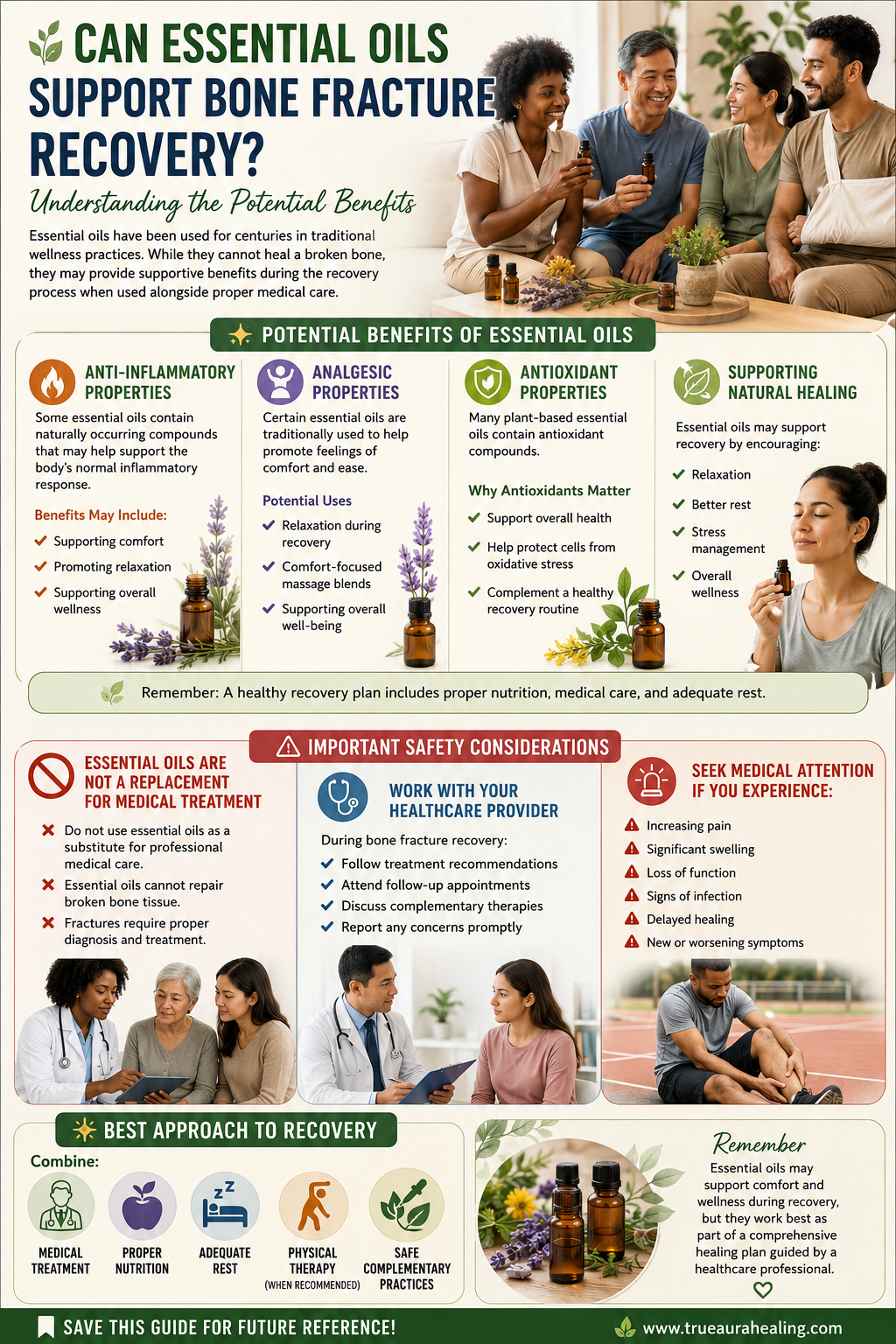
Discover how essential oils may support comfort and overall wellness during bone fracture recovery. This infographic explores the potential anti-inflammatory, antioxidant, and relaxation benefits of essential oils while emphasizing the importance of medical treatment, proper nutrition, physical therapy, and safe recovery practices. Learn how complementary wellness strategies can fit into a comprehensive bone healing plan.
Best Essential Oils for Bone Fracture Recovery
Several essential oils are commonly used to support comfort and overall wellness during bone fracture recovery. Lavender essential oil is often chosen for its calming aroma and traditional use in promoting relaxation, while arnica oil is frequently used in topical applications following physical injury to support the affected area. Black pepper essential oil has traditionally been used to support healthy blood circulation, which plays an important role in delivering nutrients throughout the body during the healing process. Helichrysum essential oil is another popular choice due to its long history of use in herbal and aromatic wellness practices, particularly for supporting skin and tissue health. Many people combine these oils into carefully diluted essential oil blends using high-quality products and a carrier oil to create a supportive recovery routine.
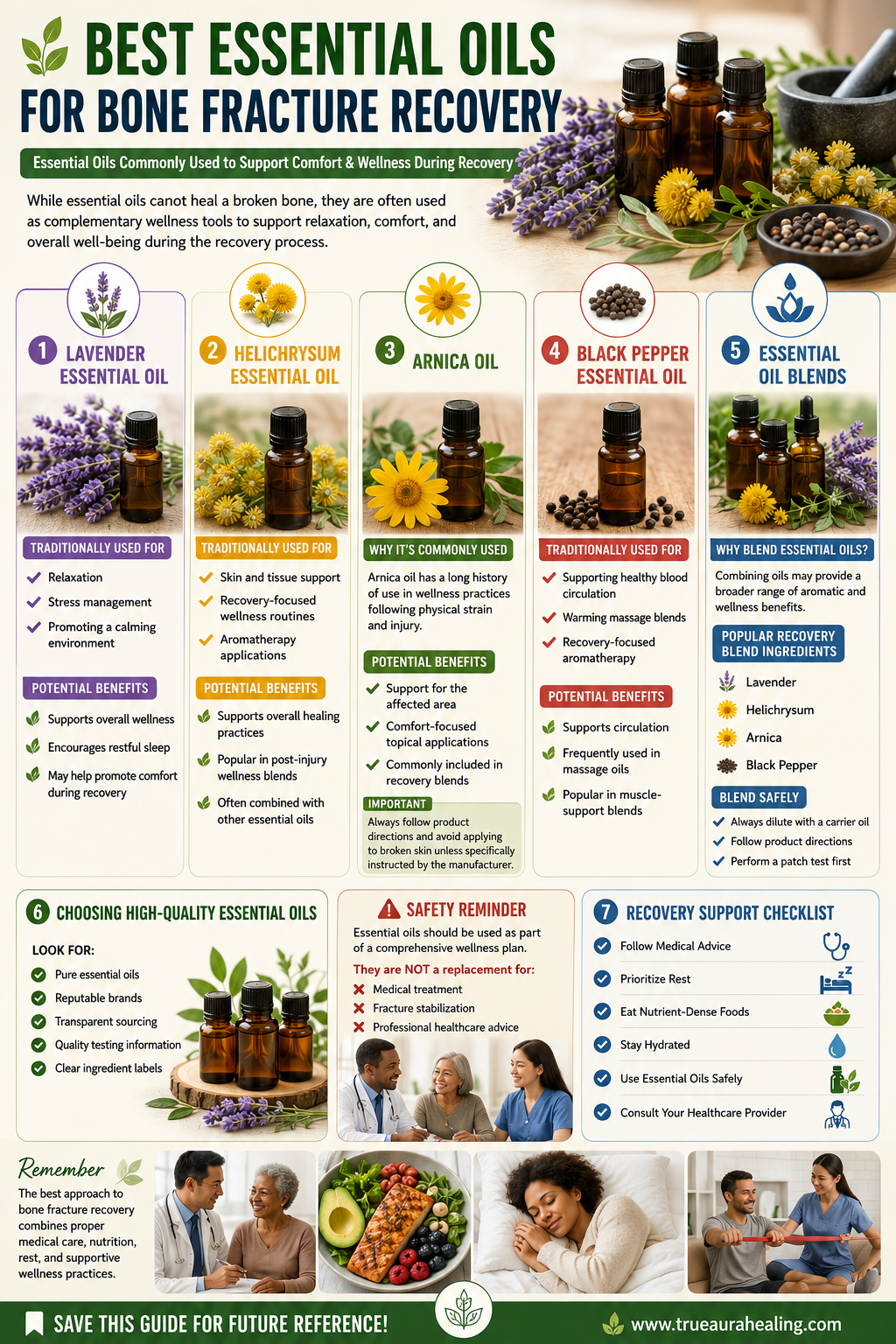
Learn about some of the most popular essential oils used during bone fracture recovery, including lavender essential oil, helichrysum essential oil, arnica oil, and black pepper essential oil. This infographic explains traditional uses, potential wellness benefits, safe blending practices, and how to choose high-quality essential oils to support a balanced recovery routine.
How to Use Essential Oils Safely
Using essential oils safely begins with proper dilution, which is why a carrier oil is an important part of any topical application. Carrier oils such as coconut oil, jojoba oil, sweet almond oil, and fractionated coconut oil help dilute concentrated essential oils and reduce the risk of skin irritation. When used in massage oil blends, diluted essential oils may help promote comfort and support healthy blood circulation around the affected area. To maximize safety and effectiveness, choose high-quality essential oils from reputable brands that provide clear ingredient information, purity testing, and transparent sourcing practices.
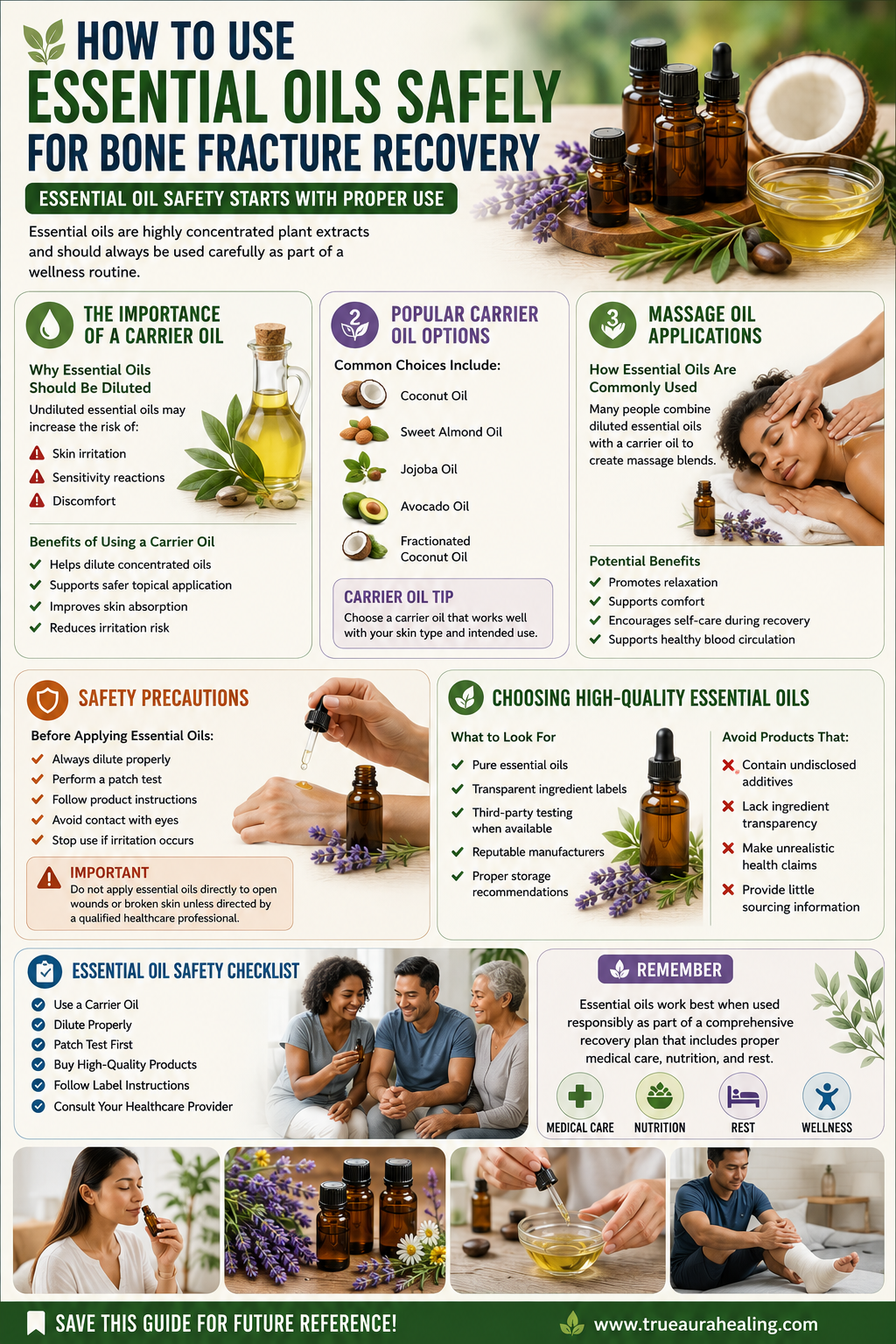
Learn how to safely use essential oils during bone fracture recovery with this guide to carrier oils, massage oil applications, dilution practices, and essential oil safety. Discover popular carrier oils such as coconut oil, jojoba oil, sweet almond oil, and avocado oil, along with tips for choosing high-quality essential oils and avoiding common mistakes.
Nutrition That Supports Bone Healing
Nutrition plays an important role in supporting bone healing and overall recovery after a fracture. Key nutrients such as vitamin D, vitamin C, and vitamin K help support bone health by contributing to bone strength, collagen formation, and normal bone regeneration processes. Nutrient-rich foods like fatty fish, cod liver oil, leafy greens, dairy products, and fresh fruit provide many of the vitamins and minerals needed to support healthy bones. Foods rich in antioxidants may also help support overall wellness during recovery by helping the body manage oxidative stress. Focusing on a balanced diet can provide the nutritional foundation needed to support the healing process and long-term bone health.
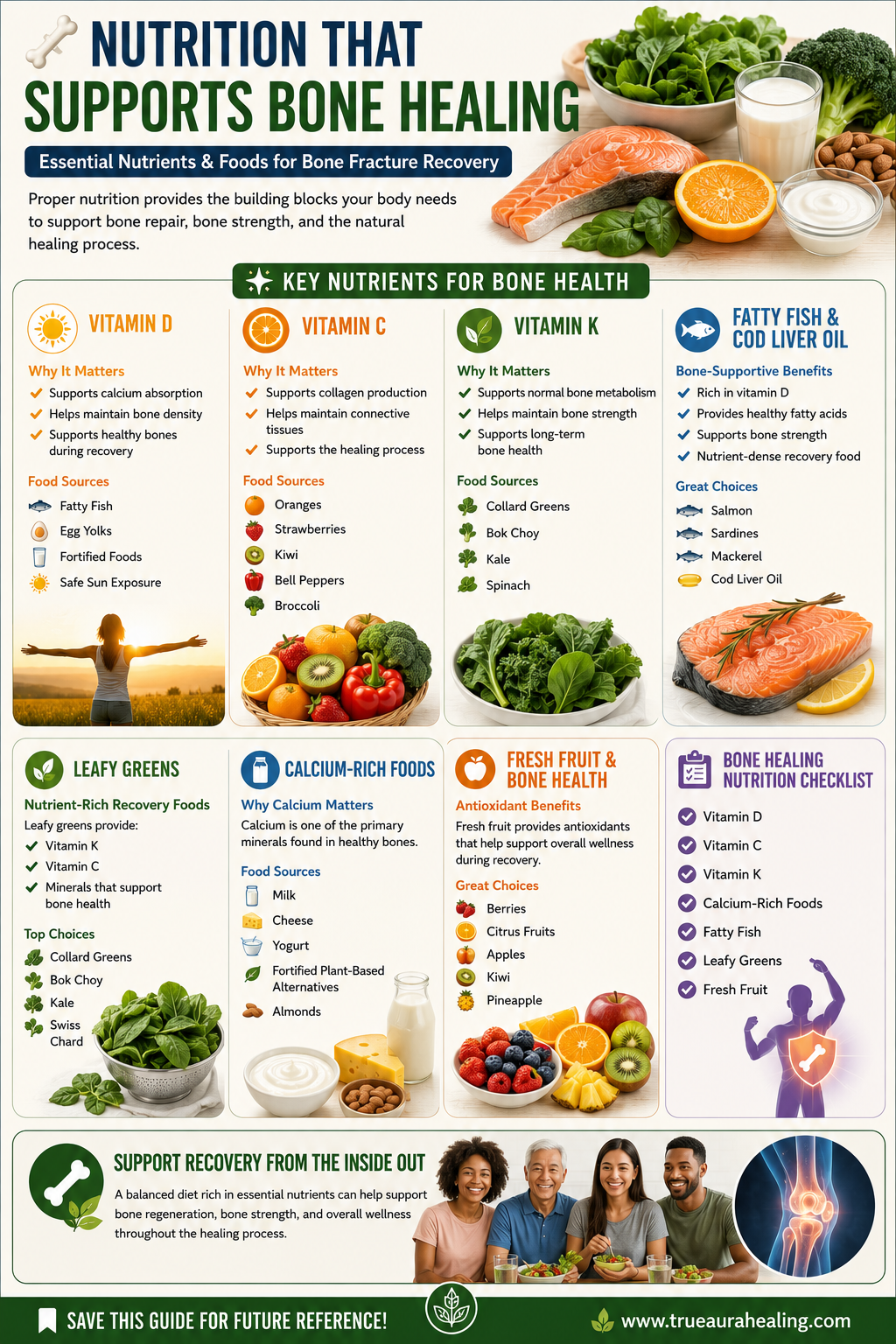
Explore the essential nutrients and foods that support bone healing after a fracture. This infographic highlights vitamin D, vitamin C, vitamin K, calcium-rich foods, leafy greens, fatty fish, cod liver oil, and antioxidant-rich fruits that may help support bone strength, bone regeneration, and overall recovery.
Supporting Recovery Beyond Essential Oils
Recovering from a bone fracture often requires more than rest alone. Physical therapy can help support mobility, strength, and function while working alongside medical treatment to encourage a safe return to daily activities. Healthy blood circulation is also important because blood vessels deliver oxygen, nutrients, and other essential compounds to healing bone tissue throughout the repair process. During recovery, some individuals may experience muscle pain, stiffness, or muscle spasms, making supportive strategies such as gentle movement, proper nutrition, hydration, and adequate rest valuable components of a comprehensive recovery plan.
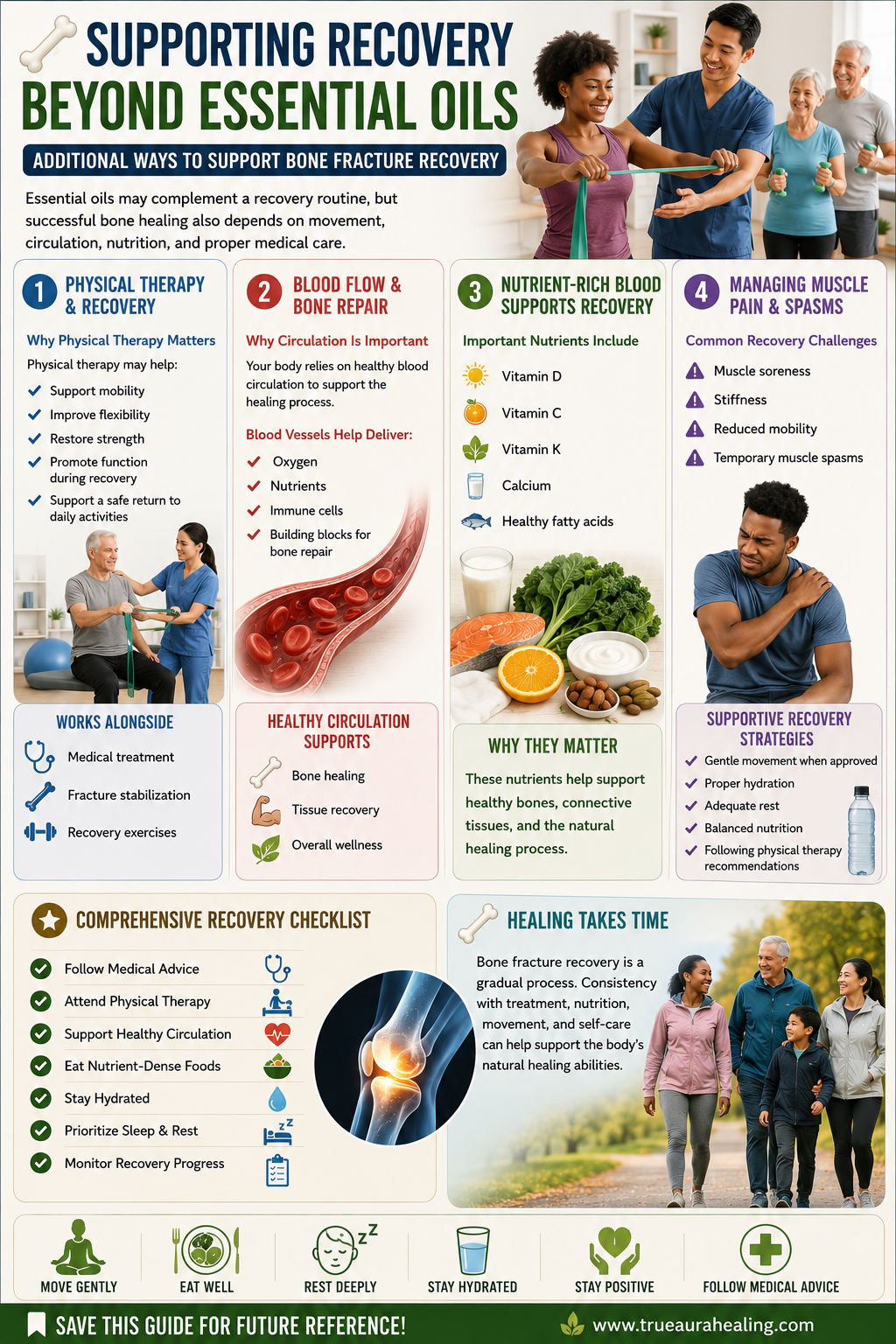
Bone fracture recovery involves more than essential oils. This infographic explains how physical therapy, healthy blood circulation, nutrient-rich foods, hydration, rest, and medical treatment work together to support bone repair, tissue recovery, mobility, and overall wellness throughout the healing process.
What the Research Says
Research on essential oils continues to grow, with both animal studies and limited clinical trials exploring their potential therapeutic properties. Some studies suggest that certain essential oils may possess anti-inflammatory, antioxidant, and comfort-supporting effects that could complement overall wellness during recovery. However, much of the current research remains preliminary, and more high-quality human studies are needed to better understand their effectiveness and safety in specific situations such as bone fracture recovery. While essential oils show promise as supportive tools in natural healing practices, they should be viewed as complementary approaches rather than proven treatments for bone repair.
Special Considerations and Safety
Essential oils are not appropriate for everyone, and extra caution should be used by pregnant women, individuals with certain medical conditions, and those taking medications or receiving ongoing medical treatment. Some essential oils may interact with medications or may not be recommended for specific health concerns, making it important to consult a qualified healthcare provider before use. While self-care practices can play a supportive role in overall wellness, they have limitations and should not replace professional medical advice or treatment. If you experience worsening symptoms, unexpected complications, or concerns about your recovery, seek medical attention promptly to ensure you receive appropriate care.
Recovering from a bone fracture requires patience, proper medical care, and a strong focus on overall wellness. Essential oils such as lavender, helichrysum, arnica, and black pepper are often used as complementary tools to support comfort and relaxation during the healing process. At the same time, maintaining bone health through nutrient-rich foods, essential vitamins, adequate rest, and appropriate physical activity can help support the body's natural recovery mechanisms. By combining evidence-based medical treatment with supportive natural healing strategies, individuals can take a balanced approach to recovery and promote long-term health and well-being.