

Everything you need to know about supplementing kava for sleep
Interest in kava kava has grown as more people search for a natural sleep aid to support relaxation and better rest. Traditionally used for centuries, kava is now gaining attention in modern herbal medicine for its calming effects on sleep issues and anxiety. Many turn to kava as a dietary supplement in hopes of improving overall sleep quality without relying on conventional sleep medications. With so many forms and opinions available, it’s important to understand how kava works, how it’s used, and what to consider for safety. This guide covers everything you need to know about supplementing kava for sleep, from traditional roots to modern use.
What Is Kava? Understanding the Plant and Its Origins
Kava comes from the plant Piper methysticum , a member of the pepper family native to the South Pacific Islands. The calming properties of kava come from the root of the kava plant, which has been traditionally harvested, dried, and ground into a powder. For centuries, Pacific Islanders, including communities in Papua New Guinea, have prepared kava as a traditional drink used in ceremonies, social gatherings, and healing rituals. Unlike modern supplements, traditional kava preparation emphasizes water-based extraction and mindful consumption. Understanding kava’s cultural and historical roots helps provide context for its modern use as a sleep and relaxation aid.
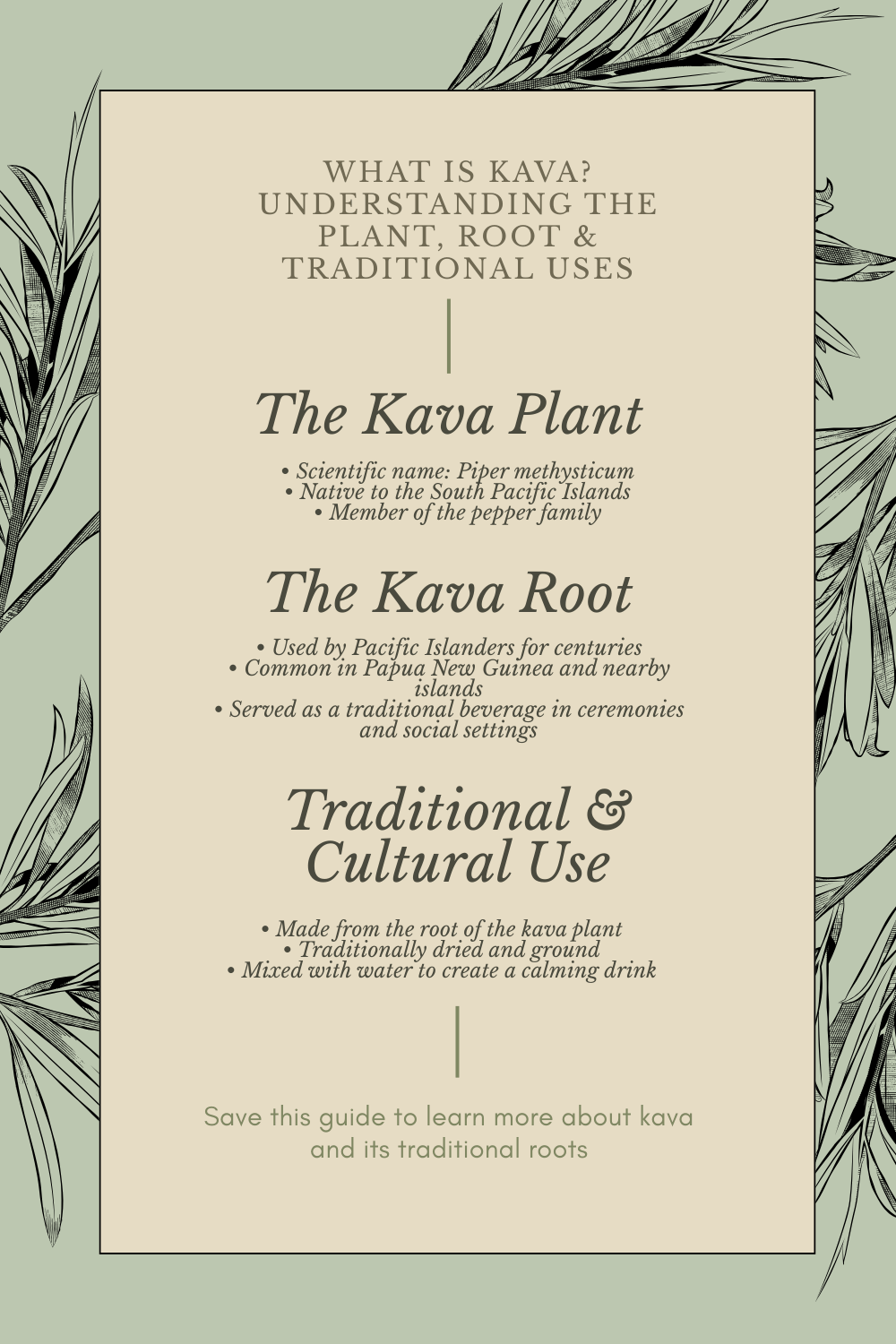
Learn what kava is, where it comes from, and how it’s traditionally used. This guide explains Piper methysticum, the kava root, and its cultural role as a traditional drink in the South Pacific Islands, including Papua New Guinea.
How Kava Works for Sleep
Kava supports sleep by interacting with the central nervous system, helping the body shift into a more relaxed state. Its active compounds, known as kavalactones, influence neurotransmitters involved in stress response and relaxation, including gamma-aminobutyric acid (GABA). Through these pathways, kava’s effects may promote muscle relaxation and noticeable calming effects without heavy sedation. By calming the nervous system, kava may help regulate the sleep cycle and support a smoother transition into rest. These gentle sedative effects are why kava is often used to support relaxation and sleep naturally.
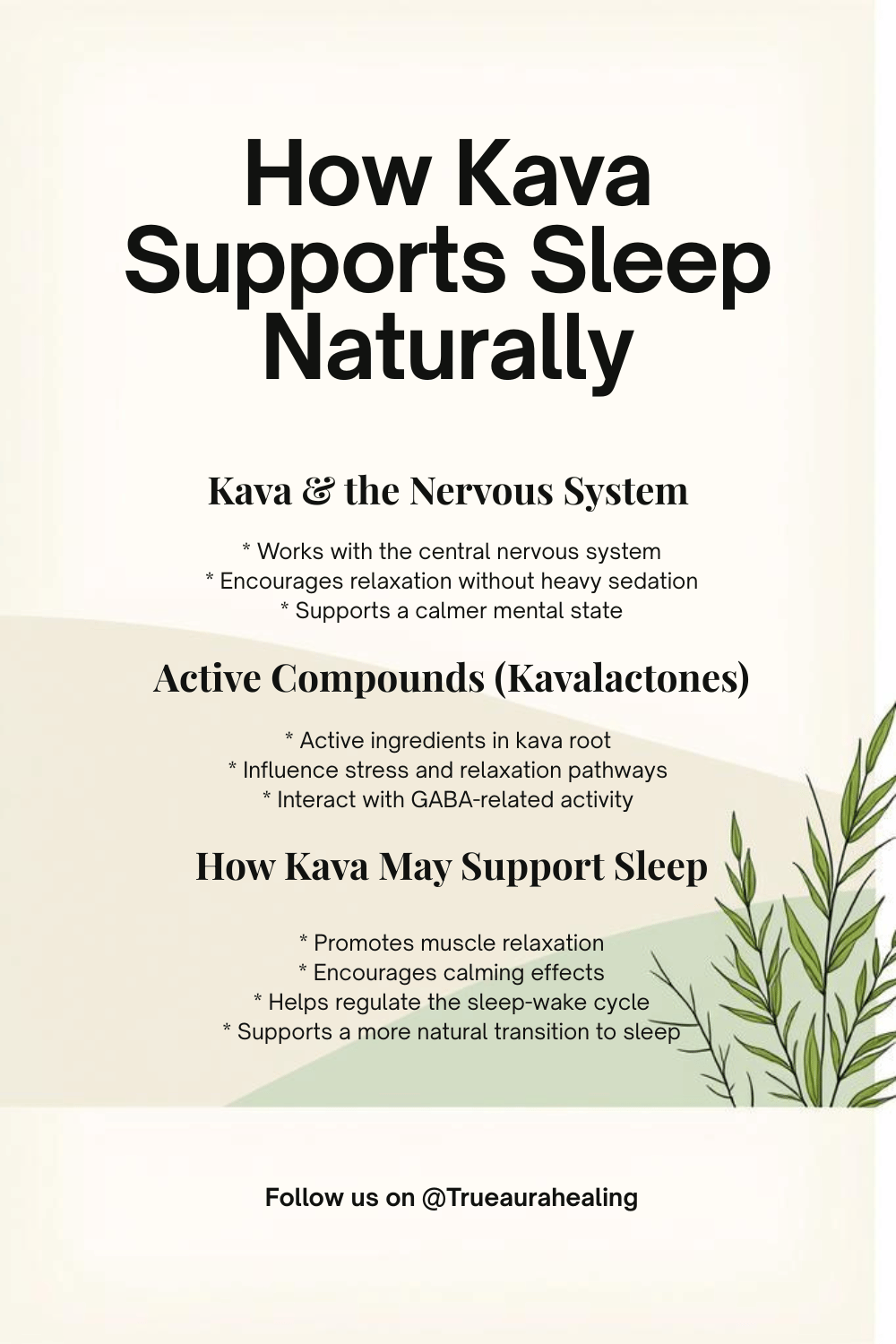
Learn how kava works for sleep by supporting the central nervous system and promoting calming effects. This guide explains kava’s active compounds, GABA interaction, and how kava may help regulate the sleep cycle naturally.
Effects of Kava on Sleep Quality
Kava may support overall sleep quality by helping the body relax and transition into sleep more easily. Many people use kava to help fall asleep faster, experience more restorative sleep, and spend more time in deep sleep. Its calming effects may also reduce nighttime awakenings and other sleep disturbances that interfere with restful rest. Because kava supports relaxation of the nervous system, it is often explored by individuals dealing with anxiety disorder, chronic insomnia, or common sleep disorders. When used appropriately, kava may contribute to better sleep without heavy grogginess the next day.
Types of Kava Used for Sleep
Noble Kava vs Tudei Kava
Not all kava is the same, and choosing the right type matters for both safety and effectiveness. Noble kava is considered the preferred option because it comes from specific different cultivars traditionally used for relaxation and is associated with fewer side effects. Tudei kava, on the other hand, is often linked to stronger effects and a higher risk of negative side effects, making it less suitable for sleep support.
Forms of Kava Supplements
Kava is also available in several forms—including kava powder, kava tea, kava extracts, and kava capsules—each with different absorption rates and effects. Understanding these options helps you choose kava products that best support relaxation and sleep.
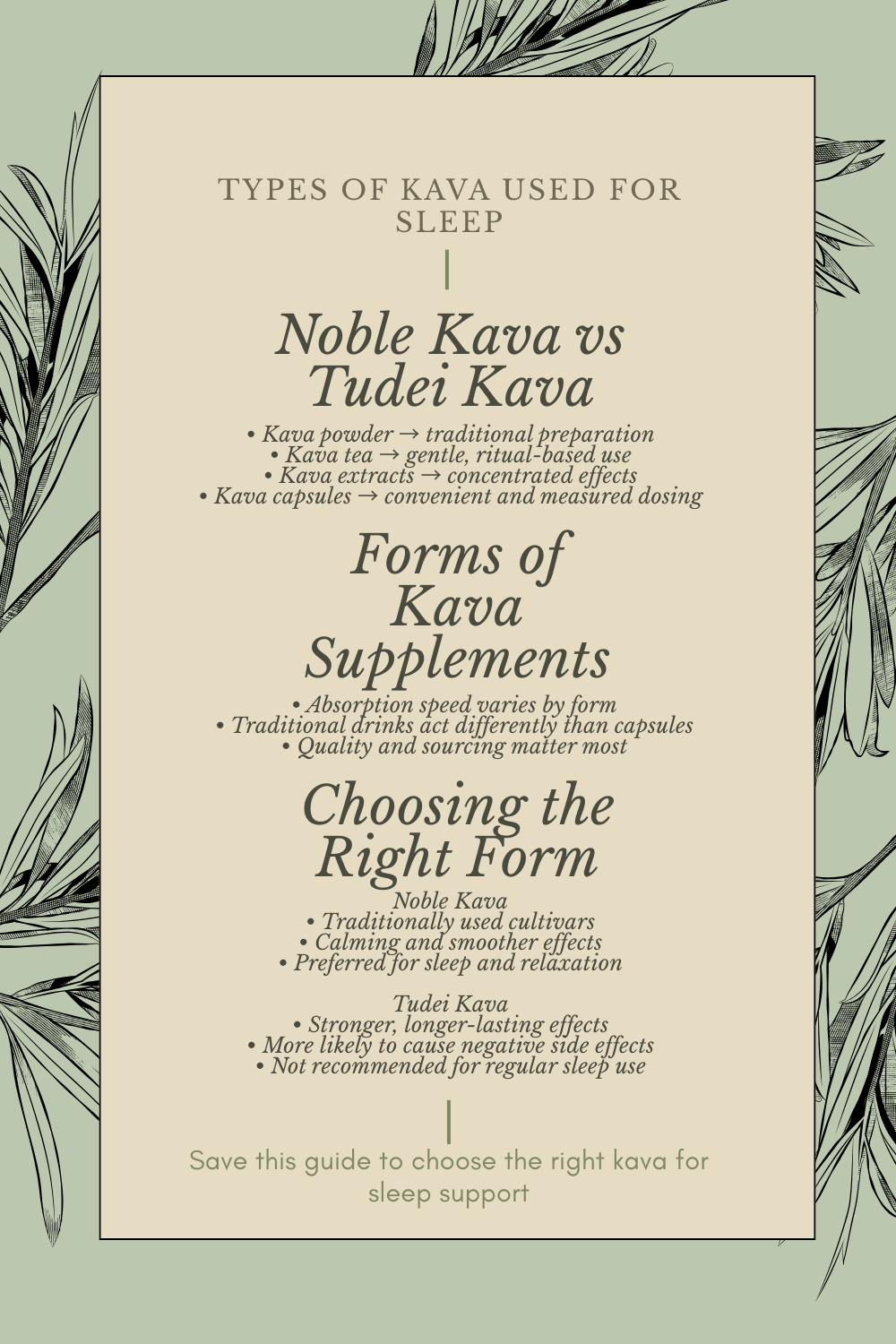
Learn about the different types of kava used for sleep, including noble kava vs tudei kava and common kava supplement forms. This guide breaks down kava powder, tea, extracts, and capsules to help you choose the best option for relaxation and better sleep.
Best Kava for Sleep — What to Look For
Choosing the best kava for sleep involves more than picking the strongest option—it’s about safety, quality, and reliability. The strongest kava can provide more noticeable relaxing effects, but only when sourced responsibly from trusted cultivars. Always prioritize lab-tested kava from reputable origins to ensure purity and avoid low-quality or adulterated products. Understanding the variety of kava available helps you select the right type for safe, effective sleep support. Paying attention to quality ensures you get the calming benefits of kava without unnecessary risks.
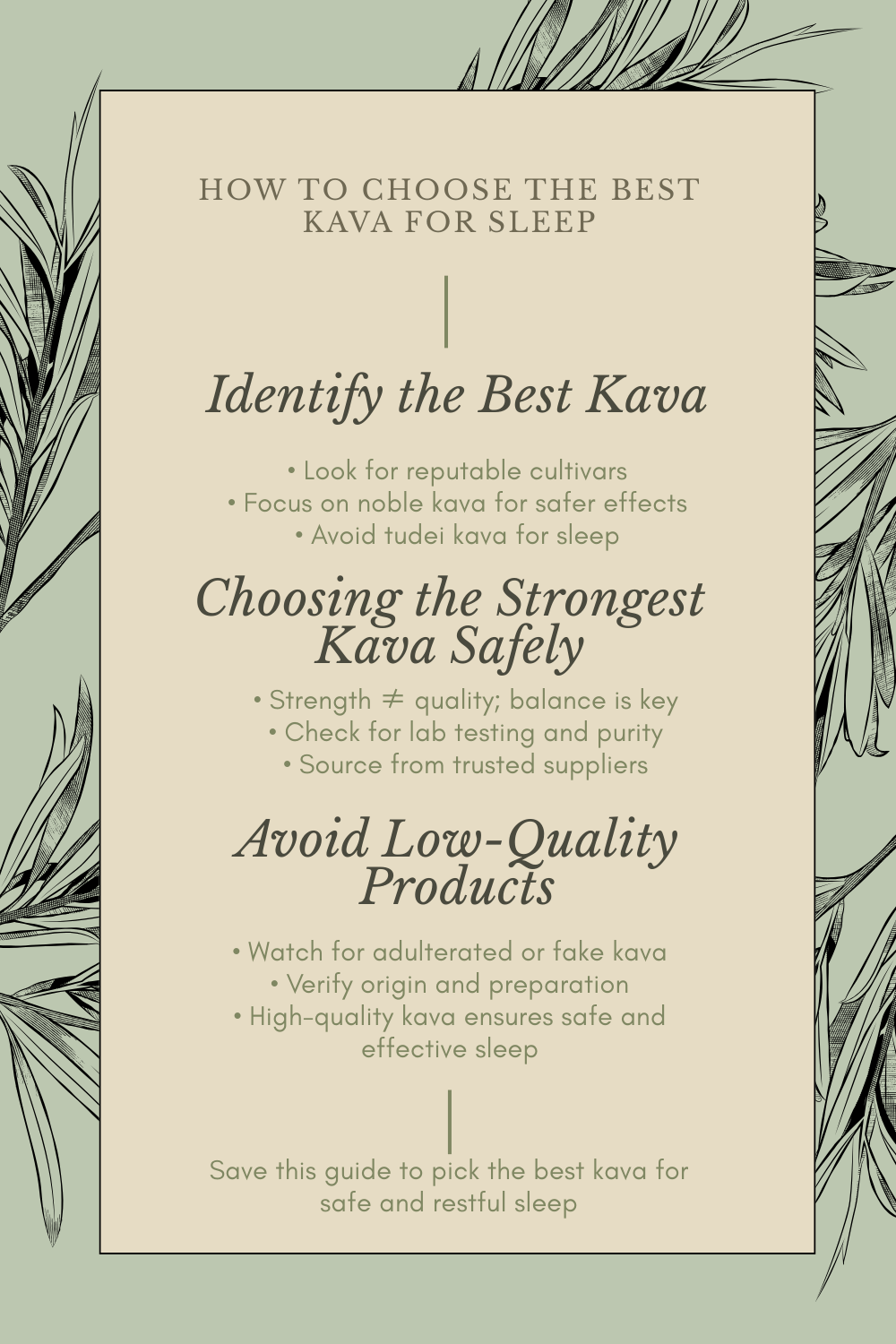
Learn how to choose the best kava for sleep safely. This guide explains how to identify the strongest kava, prioritize lab-tested sources, and avoid low-quality or adulterated products for safe, effective relaxation.
Dosage, Timing, and Safe Kava Consumption
When using kava for sleep, starting with small doses is key to experiencing its calming effects safely, while high doses can increase the risk of side effects. Timing also matters—taking kava in the evening or about an hour before bed can help support a natural sleep cycle. It’s important to know how much kava is too much, as exceeding recommended amounts may strain the liver or cause excessive sedation. Regular, long-term use should be approached cautiously, and users should monitor both frequency and duration. Practicing mindful kava consumption ensures you get the relaxing benefits without compromising safety.
Kava Safety, Side Effects, and Liver Health
Liver Damage Concerns Explained
While kava can support relaxation and sleep, it’s important to be aware of potential safety concerns, particularly regarding liver health. Reports of liver damage, liver failure, and liver disease have prompted research and guidance from the World Health Organization and multiple clinical studies. Monitoring liver enzymes and understanding the risks of potential liver toxicity is essential, especially with higher doses or long-term use.
Negative and Harmful Side Effects
Kava may also cause negative side effects, including digestive upset, sedation, and skin changes. People with an existing medical condition, those who consume alcohol regularly, or those taking certain medications should avoid kava unless under professional medical advice. Using high-quality kava in moderation helps minimize risks while supporting its calming effects.
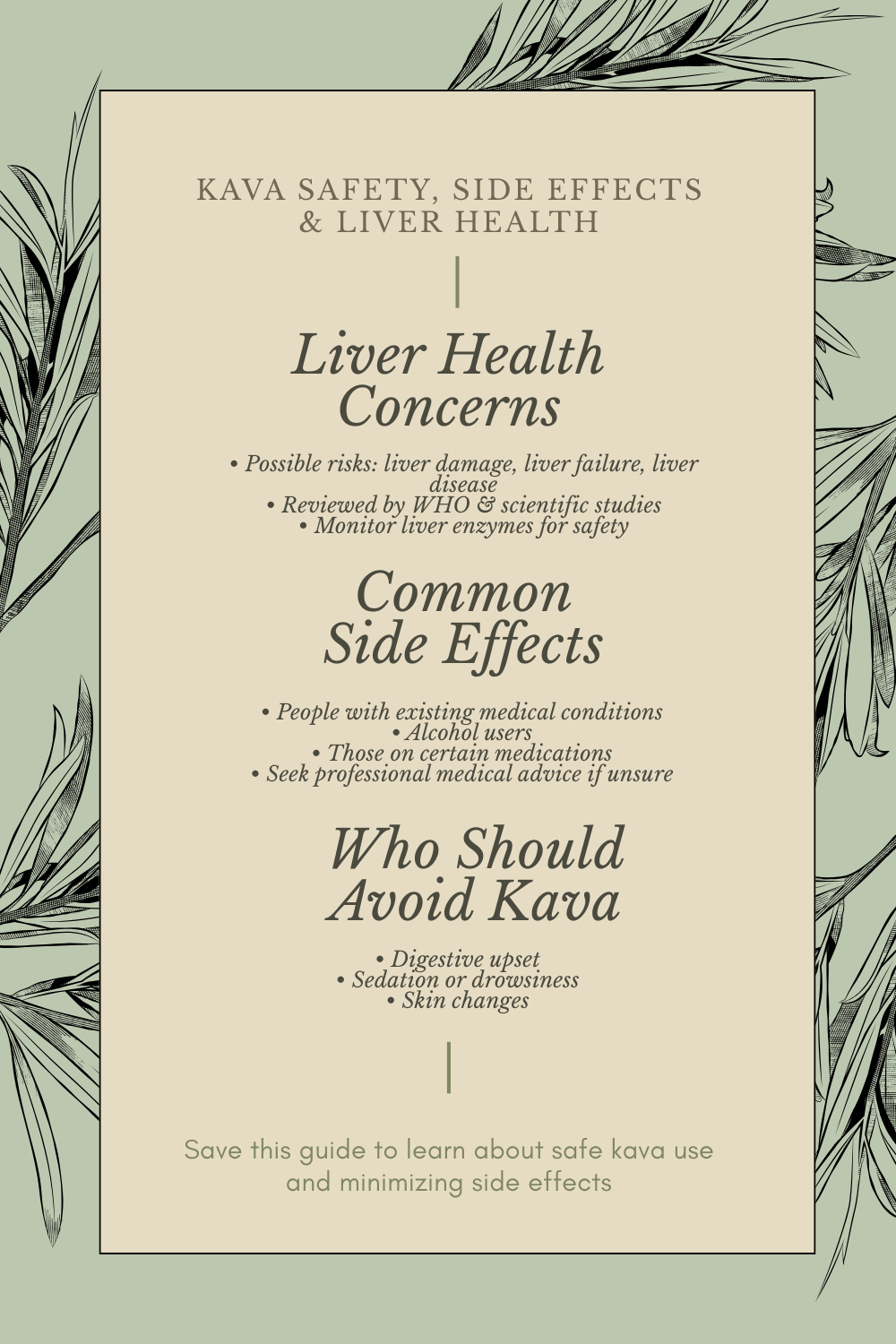
Learn about kava safety, side effects, and liver health. This guide covers potential liver toxicity, common negative side effects, and who should avoid kava to support safe and effective use for relaxation and sleep.
Kava vs Other Natural Sleep Remedies
Kava is one of several natural remedies people use to support sleep, with valerian root being another popular option. Unlike some alternatives, kava may provide a more pronounced calming effect on the nervous system, making it a preferred choice for those needing relaxation before bed. However, the best remedy depends on individual needs, tolerance, and sensitivity, as some people respond better to valerian or other herbal solutions. Considering the effectiveness, dosage, and personal response, kava can be a safe and natural alternative for promoting restful sleep. Always evaluate which option is most appropriate for your sleep challenges.
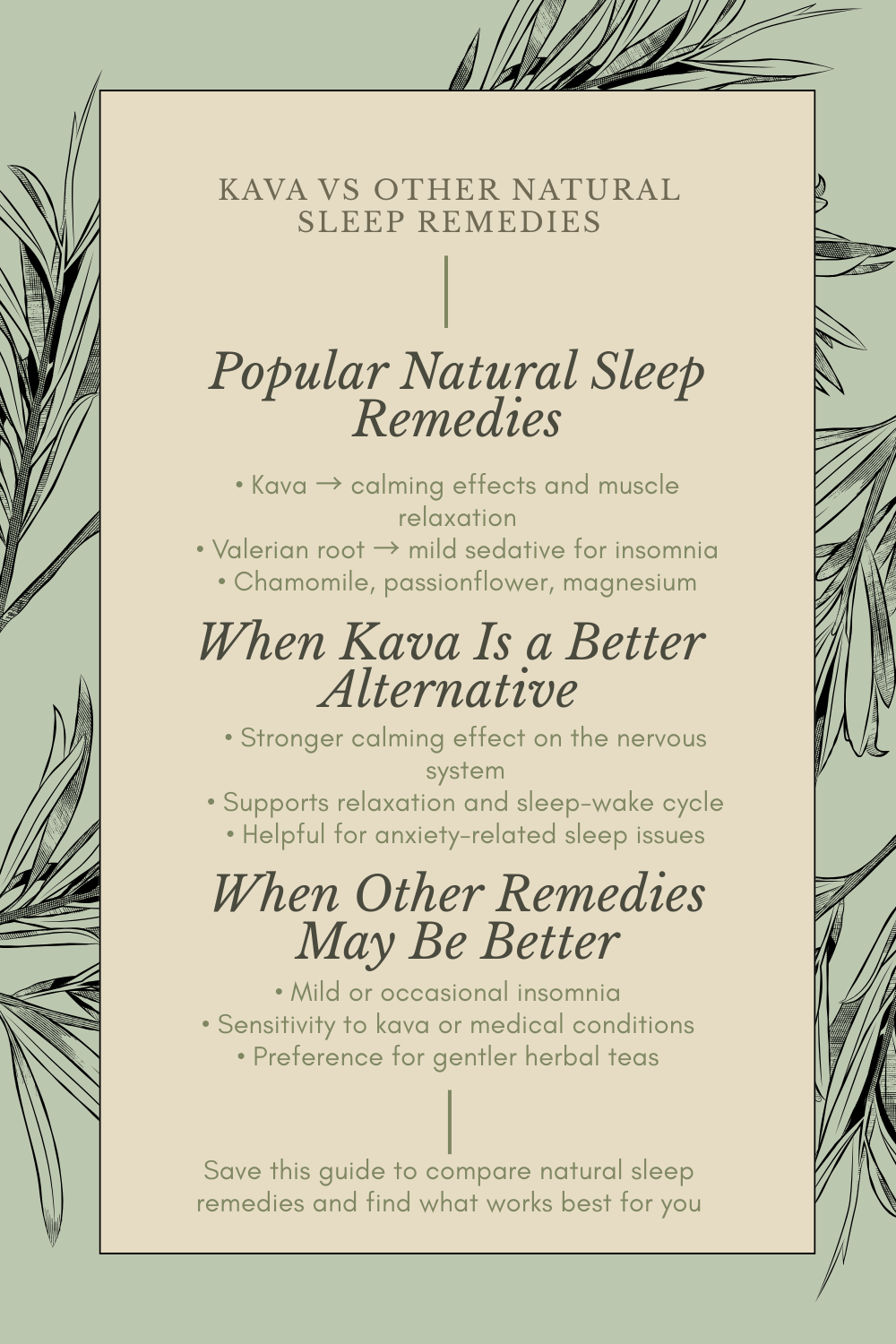
Compare kava vs other natural sleep remedies like valerian root and chamomile. Learn when kava may be the better natural alternative and when other herbs might be more appropriate for supporting restful sleep.
Traditional Use vs Modern Supplementation
Kava has a rich history as a traditional beverage in the South Pacific Islands, where it is consumed in ceremonies and social gatherings. This traditional use reflects generations of cultural knowledge about its calming and relaxing effects. In modern times, kava is also available in capsules, extracts, and powders, making it convenient for daily supplementation. Kava bars have emerged as social spaces where people enjoy kava for its relaxation benefits without alcohol, blending tradition with contemporary lifestyle. Understanding the balance between traditional knowledge and modern use helps people use kava safely and respectfully.
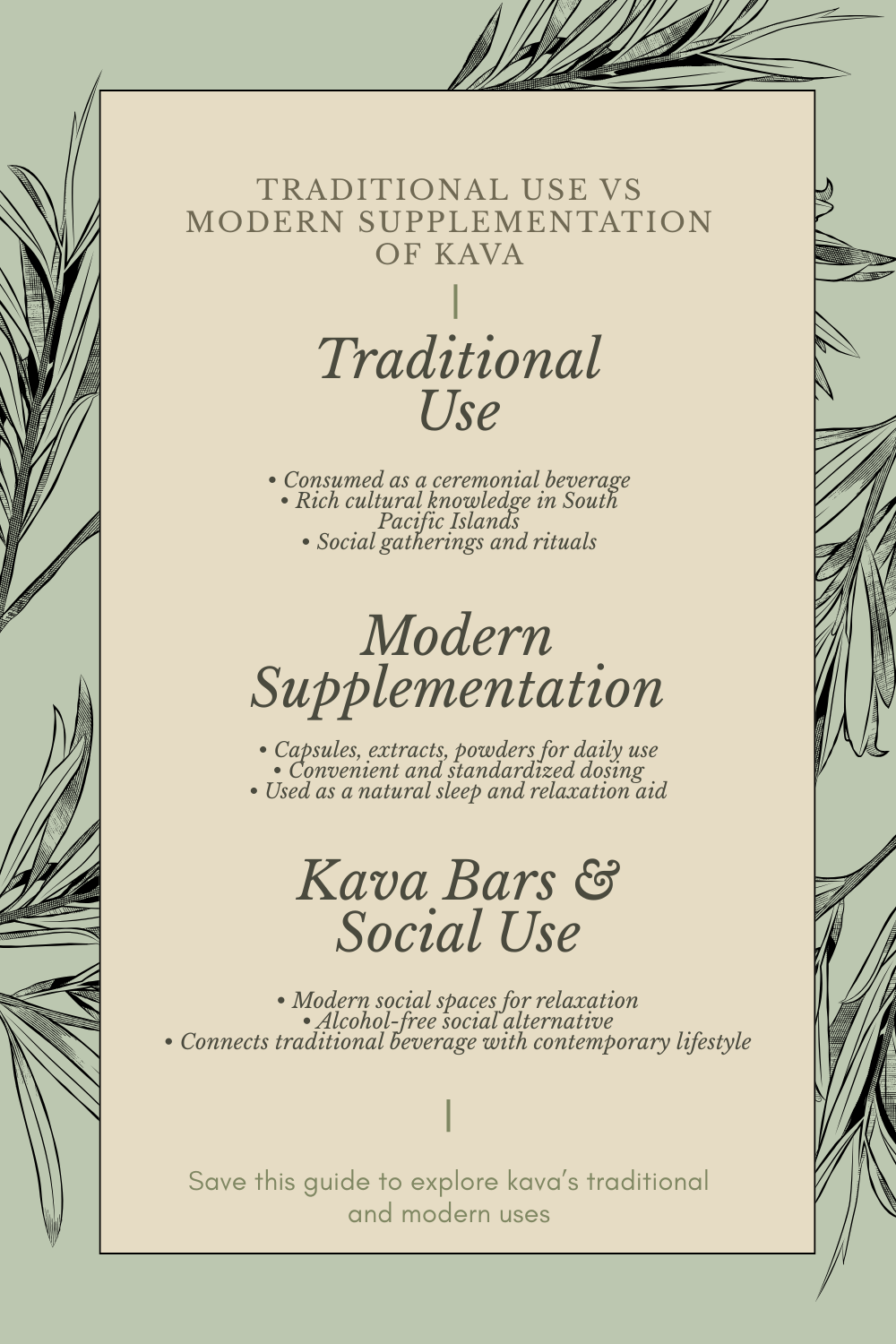
Discover the difference between traditional kava use and modern supplementation. Learn about ceremonial kava drinks, capsules, extracts, and the rise of kava bars as a social and relaxing alternative.
Who Should (and Shouldn’t) Use Kava for Sleep
Kava can be a helpful dietary supplement for people seeking natural support for relaxation and sleep, especially those experiencing mild sleep disturbances or stress-related insomnia. However, not everyone is a suitable candidate—individuals with certain medical conditions, liver concerns, or those taking medications should approach kava cautiously. It’s important to seek professional medical advice before using kava, particularly for long-term use or higher doses. People in the United States should also be aware of regulatory guidelines and ensure they are using kava products from reputable sources. Choosing kava thoughtfully ensures safe and effective support for better sleep.
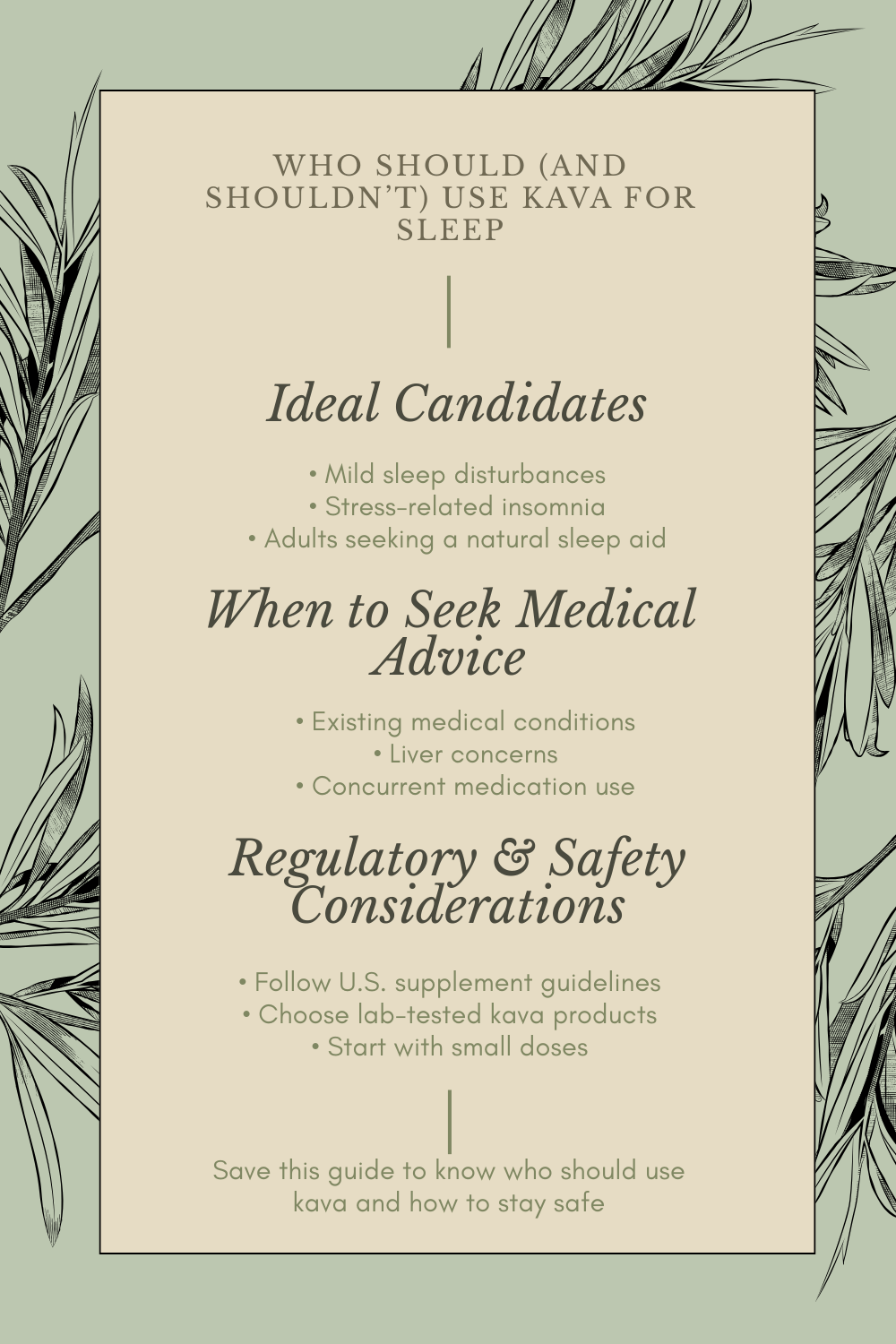
Learn who can safely use kava for sleep and who should avoid it. This guide covers ideal candidates, when to seek professional medical advice, and important U.S. regulatory considerations for safe kava use.
Tips for Using Kava to Support Better Sleep Naturally
To get the most out of kava for sleep, it’s helpful to pair supplementation with a balanced diet rich in nutrients that support overall relaxation and nervous system health. Establishing an evening routine—such as limiting screen time and dimming lights—can enhance kava’s significant effect on promoting calm and readiness for sleep. Incorporating deep breathing or other relaxation techniques helps regulate the nervous system and complements kava’s natural calming properties. Small lifestyle adjustments alongside responsible kava use can make a noticeable difference in restful sleep and overall sleep quality.
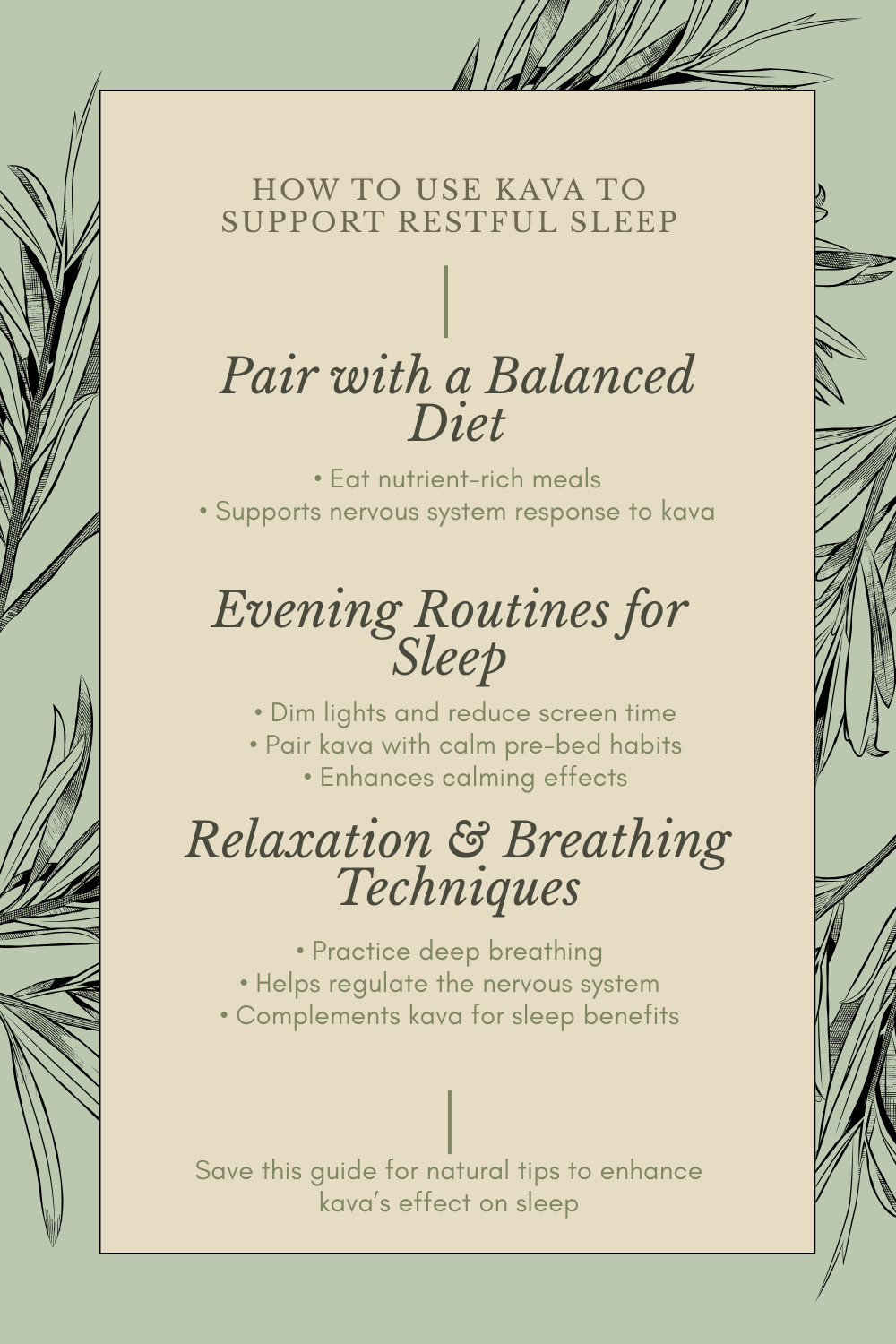
Discover practical tips for using kava to support better sleep naturally. Learn how a balanced diet, evening routines, and deep breathing techniques can enhance kava’s calming effects for restful, restorative sleep
Kava offers a promising natural alternative for supporting relaxation and improving sleep quality, particularly when used responsibly and in the right form. Ensuring product quality, appropriate dosage, and awareness of safety considerations is essential for maximizing benefits while minimizing risks. Whether consumed as a traditional beverage, capsule, or extract, kava works best as part of a holistic sleep routine that includes healthy habits and stress management. By approaching kava thoughtfully, individuals can enjoy its calming effects and support restful, restorative sleep naturally.