

Top Potting Soil For Growing Herbs Indoors
Top Potting Soil for Growing Herbs Indoors (Best Mixes for Healthy, Thriving Plants)
Choosing the best potting soil is the foundation of success when growing herbs indoors, because the right soil directly affects root health, nutrient absorption, and overall plant growth. Many people struggle with indoor plants because they use garden soil, overwater, or choose mixes that don’t provide proper drainage, leading to weak growth or root rot. The best soil for growing herbs indoors balances moisture retention with airflow while delivering essential nutrients your plants need to thrive. When drainage, nutrients, moisture, and light work together, indoor herb plants can produce strong roots, vibrant leaves, and steady growth. Starting with the right potting soil is the best way to get the best results from your indoor herb garden year-round.
Why Potting Soil Matters for Indoor Herb Plants
Potting soil matters for indoor herb plants because it is specifically designed to support healthy growth in container plants, unlike heavy garden soil that can compact and restrict airflow. A high-quality, nutrient-rich soil mix allows the roots of the plant to breathe while efficiently delivering essential nutrients needed for steady growth. The right potting mix also balances water retention, holding enough moisture without trapping excess water that can lead to root problems. Because container-grown herbs rely entirely on the soil in their pots, a specialized indoor mix is essential for strong roots, healthy foliage, and long-term success.
Understanding the Needs of Different Types of Herbs
Annual vs Perennial Herbs
Understanding the Needs of Different Types of Herbs
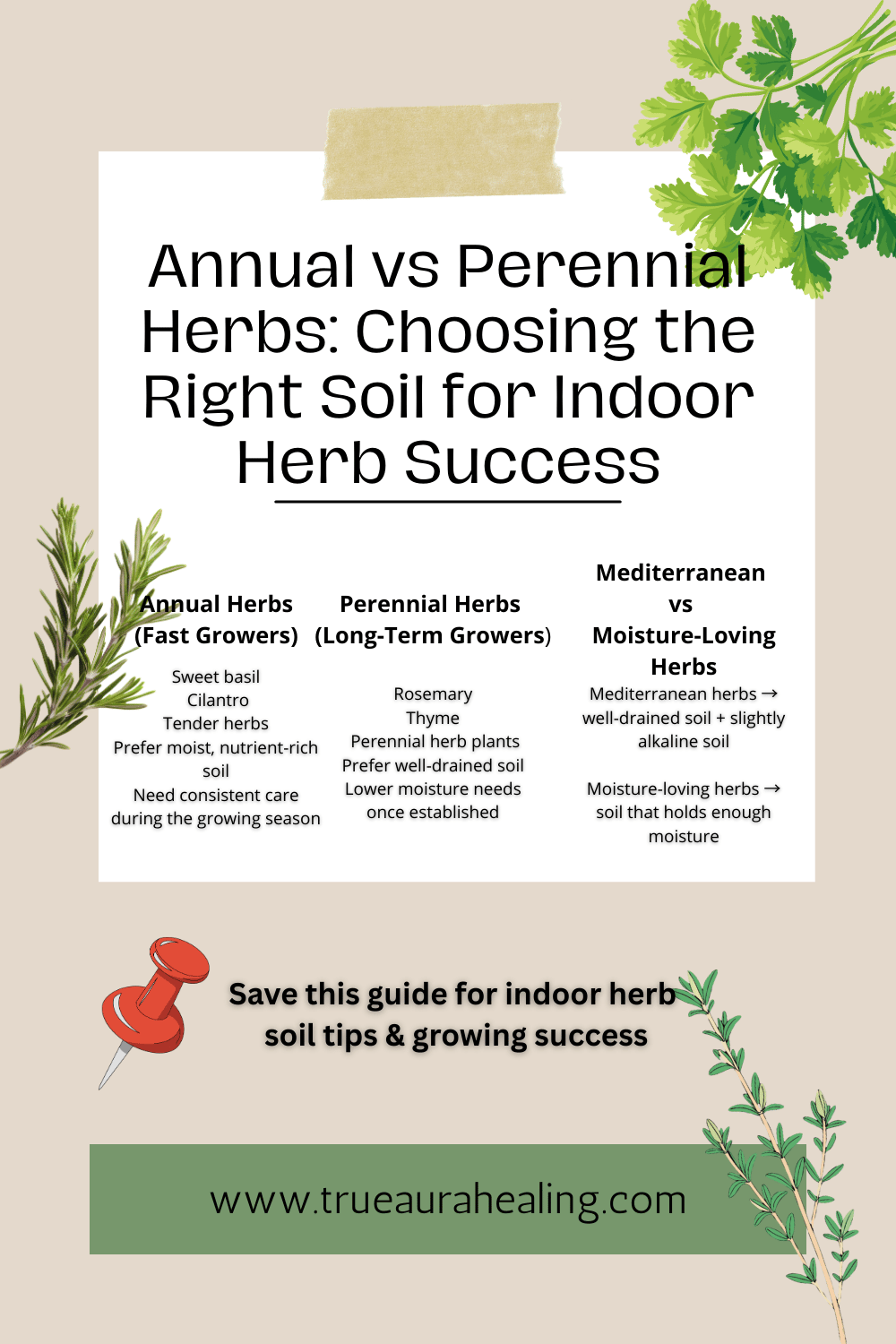
Not all herbs grow the same, which is why understanding the difference between annual herbs and perennial herbs is essential for long-term success. Annual herbs like sweet basil and cilantro are tender herbs that grow quickly and prefer consistently moist, nutrient-rich soil throughout the growing season. In contrast, perennial herb plants such as rosemary and thyme develop woody stems and need soil that drains well to support healthy root systems year after year. Soil needs also change as the growing season progresses, with young plants requiring more moisture and established herbs preferring slightly drier conditions. Matching your soil type to each herb’s natural growing habit helps prevent stress, disease, and poor growth indoors.
Mediterranean Herbs vs Moisture-Loving Herbs
Mediterranean herbs thrive in well-drained soil and often prefer a slightly alkaline soil, mimicking their native dry climates. Moisture-loving herbs, on the other hand, need soil that holds enough moisture without becoming waterlogged. Choosing the right soil balance for each group leads to healthier plants and more flavorful harvests.
The Best Soil Characteristics for Growing Herbs Indoors
Drainage Is Non-Negotiable
Healthy indoor herbs start with soil that supports both roots and nutrients. Proper drainage is non-negotiable when growing herbs indoors, as trapped or excess water can quickly lead to root rot, especially in a small pot. Soil with good structure creates air pockets that allow oxygen to reach the roots, promoting stronger and healthier root systems.
Nutrients & Organic Material
In addition to drainage, herbs need fertile soil to support steady growth and flavorful leaves. A balanced mix of organic material, organic matter, and worm castings provides nutrients naturally without overwhelming plants. Avoid using too much fertilizer, as excess nutrients can stress herbs and reduce overall plant health.
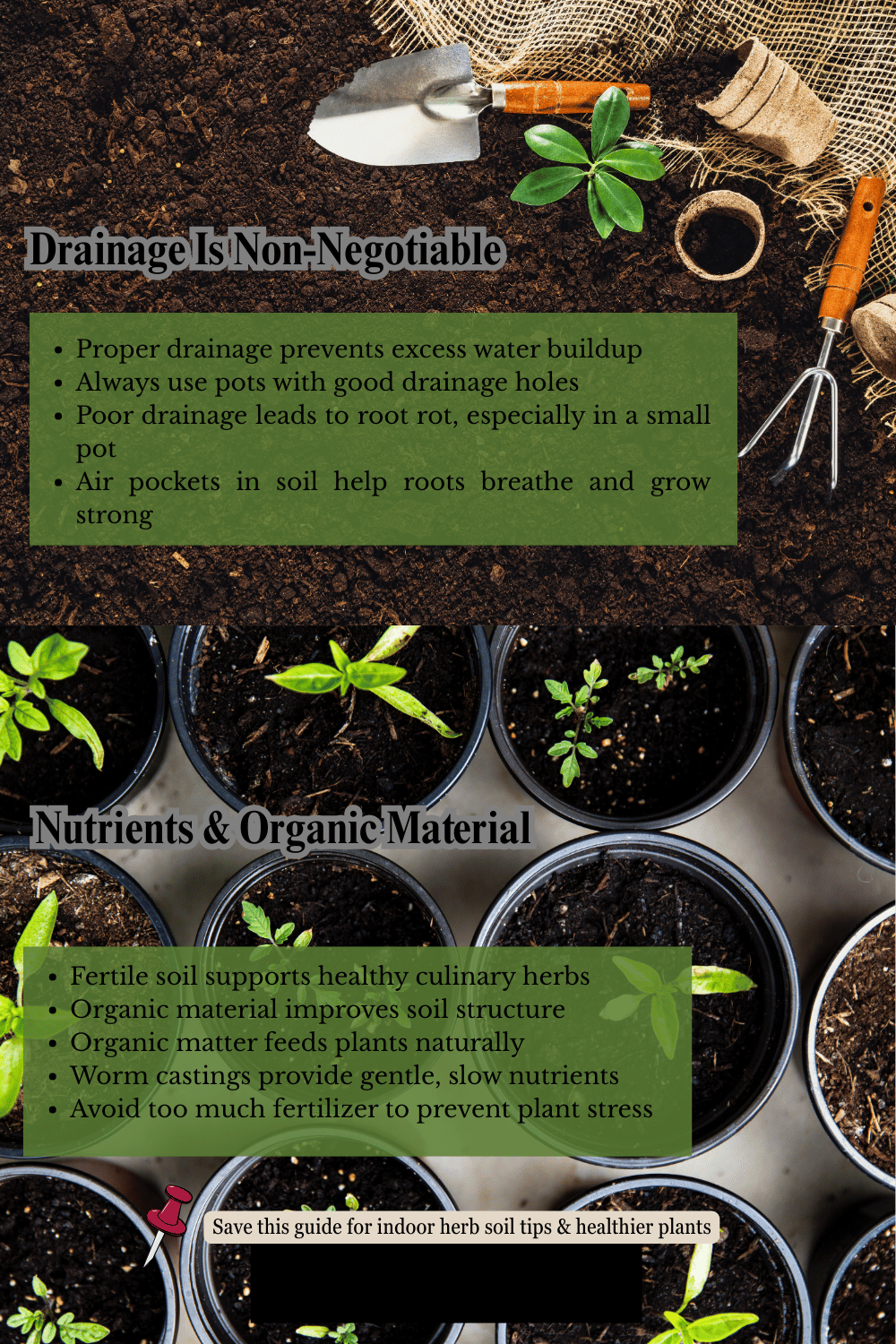
Learn the best soil characteristics for growing herbs indoors, including why proper drainage, air pockets, and organic nutrients matter. This simple guide explains how to prevent root rot, avoid excess water, and choose fertile soil for healthy indoor herb plants. Perfect for beginner and natural gardeners growing herbs in containers.
Ideal Soil Ingredients for Indoor Herb Gardening
Peat Moss and Alternatives
Choosing the right soil type is essential for growing healthy herbs indoors. Peat moss is commonly used in potting mixes because it helps regulate moisture, keeping soil from drying out too quickly while still allowing airflow to the roots. For a more sustainable option, coconut coir offers similar moisture control without the environmental concerns associated with peat harvesting.
Soil Types to Avoid Indoors
Not all soils work well indoors—clay soils compact easily and restrict oxygen, while sandy soils drain too fast and struggle to hold nutrients. Avoiding these soil types helps create a balanced growing environment that supports steady herb growth in containers.
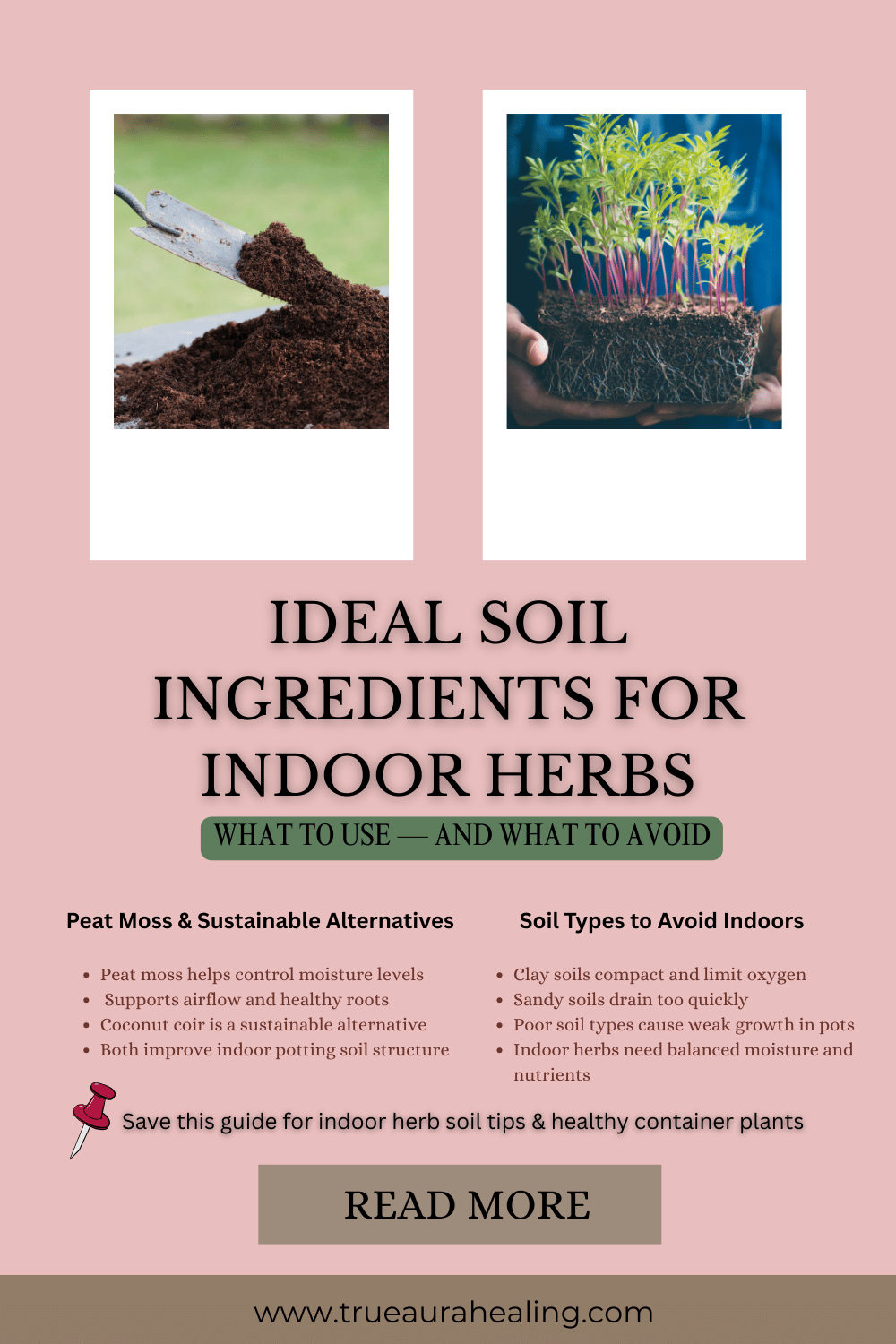
Discover the ideal soil ingredients for indoor herb gardening, including the role of peat moss and sustainable alternatives like coconut coir. Learn why clay soils and sandy soils don’t work well for indoor pots and how choosing the right soil type leads to healthier herbs and better growth indoors.
pH Level Explained: Getting It Right for Herbs
Understanding pH level is key to growing healthy herbs because it directly affects how well plants absorb nutrients from the soil. Most herbs thrive in neutral soil, while some Mediterranean varieties prefer slightly alkaline soil for optimal growth. If the pH is too high or too low, nutrients can become unavailable even when the soil is otherwise healthy. A simple soil test—using an at-home kit or digital meter—helps you adjust conditions early and prevent growth problems before they start.
Best Potting Soil Options for Indoor Herbs
Store-Bought Potting Mixes
Choosing the best potting soil for indoor herbs starts with understanding what supports healthy roots and steady growth. A good potting mix should be lightweight, well-draining, and rich in organic material to support container-grown herbs indoors. When shopping at a local garden center, garden centers, or even big box stores, look for mixes labeled for indoor plants or herbs and avoid heavy blends designed for outdoor use.
DIY Indoor Potting Mix (Natural & Budget-Friendly)
High-quality store-bought soils are a good choice for beginners who want convenience and consistent results. For a natural and budget-friendly option, a DIY potting mix gives you full control over ingredients and nutrient balance. Homemade soil can also be mixed in batches and stored in a sealed plastic bag for future use.
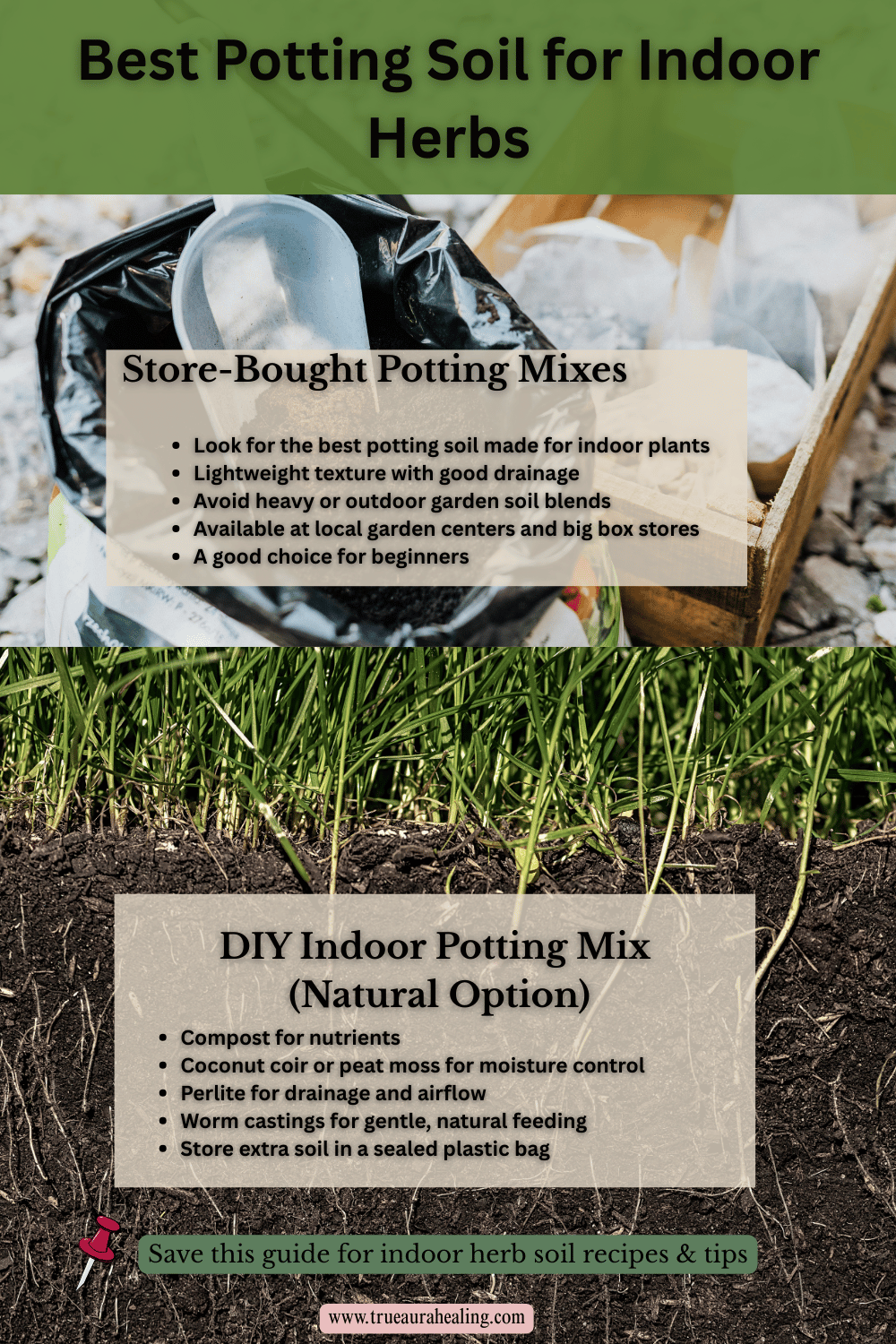
Looking for the best potting soil for indoor herbs? This guide compares store-bought potting mixes and an easy DIY indoor soil recipe using compost, coconut coir, perlite, and worm castings. Perfect for beginner gardeners growing herbs indoors in containers.
Choosing the Right Container for Indoor Herbs
Choosing the right herb planters is essential for successful container gardening. Plastic pots are lightweight and retain moisture, while clay pots allow better airflow but dry out faster, so picking the right material depends on your herbs’ needs. Always ensure your pots have good drainage holes to prevent water buildup and root rot. As your potted herb grows, knowing when to size up from a small pot to a larger container helps maintain healthy roots and steady growth.
Light, Location & Soil Work Together
For indoor herbs, light, location, and soil all work together to create the right growing conditions. Most herbs thrive with direct sunlight or full sun, though some tolerate partial shade when needed. Placing plants in a sunny location or sunny spot indoors ensures they get plenty of sunshine for strong growth. When natural light is limited, using a grow light provides the extra energy your herbs need to thrive year-round.
Feeding Indoor Herbs Without Overdoing It
Providing the right nutrition is key to keeping indoor herbs healthy, but too much fertilizer can stress plants. Best plant food options include gentle choices like fish emulsion or a slow-release fertilizer, which provide steady nutrients without overwhelming your herbs. Young herbs benefit from lighter, more frequent feeding to support strong root and leaf development, while established herbs require less frequent but consistent nutrients. Paying attention to feeding schedules helps maintain balanced growth and flavorful, aromatic leaves. By feeding herbs correctly, you support both tender young plants and mature indoor herbs for a thriving container garden.
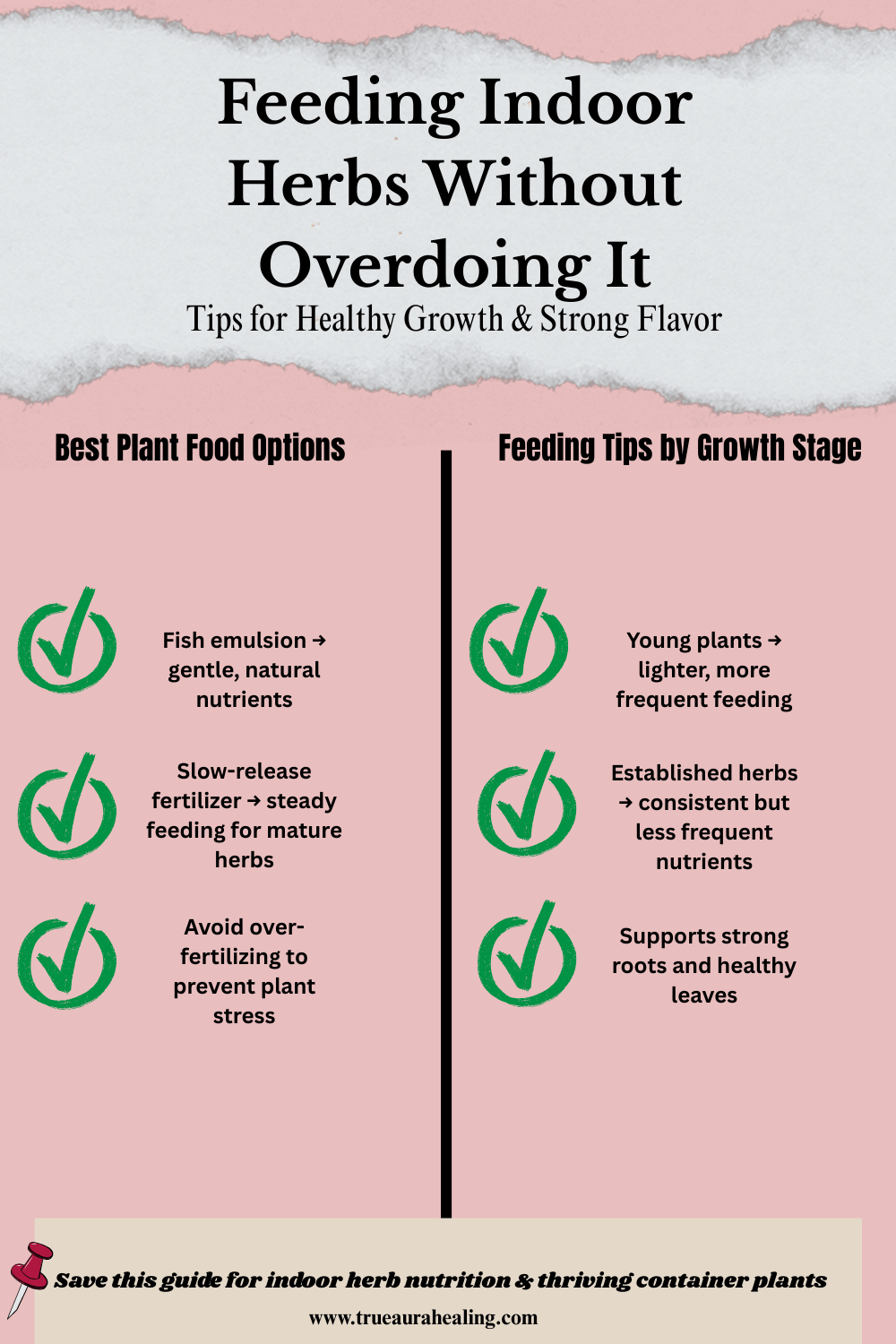
Learn how to feed indoor herbs without overdoing it! Discover the best plant food options like fish emulsion and slow-release fertilizer, plus tips for feeding both young and established herbs. Perfect for indoor herb gardeners who want healthy, flavorful plants in containers.
Common Soil Mistakes That Kill Indoor Herbs
Many indoor herb gardeners unknowingly harm their plants by making common soil mistakes. Overwatering can compact the soil, limiting airflow to the roots and increasing the risk of root rot. Using outdoor garden soil indoors is another common error, as it’s too dense and poorly draining for container-grown herbs. Ignoring proper drainage and root health often leads to weak growth, yellowing leaves, and stunted herbs, even when other care factors are correct.
Tips for a Thriving Indoor Herb Garden
Creating a thriving herb garden indoors starts with matching the right soil to each type of herb, ensuring that both moisture and nutrient needs are met. Giving your herbs a head start with quality soil helps young plants develop strong roots and healthy leaves from the very beginning. The best way to grow your own fresh herbs year-round is to combine proper soil, adequate light, and consistent watering tailored to each plant’s needs. Regularly checking for drainage, adjusting soil composition, and rotating herbs for light exposure keeps your indoor herb garden productive and flavorful. By following these simple steps, you can enjoy fresh, aromatic herbs every day while avoiding common growing mistakes.
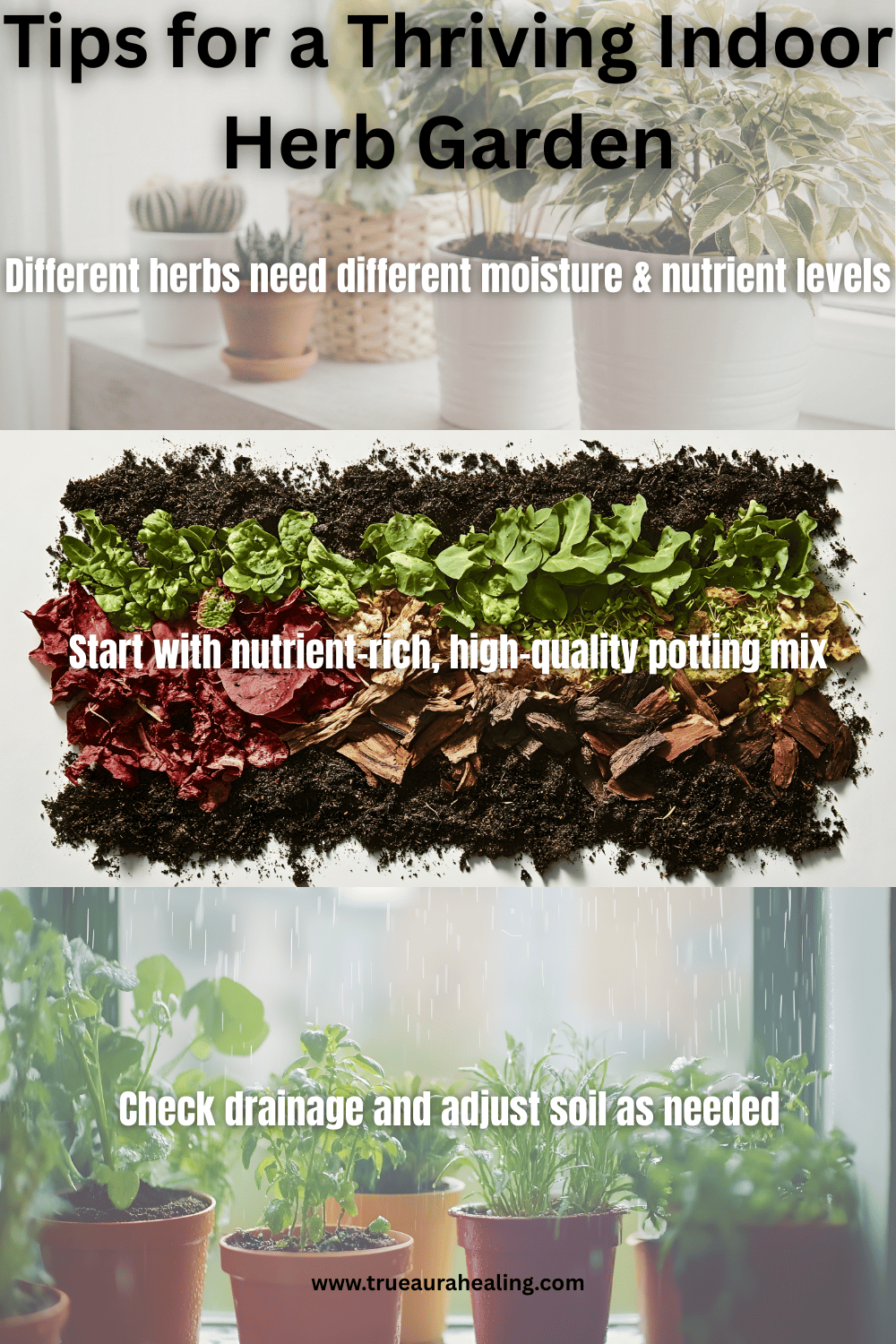
Learn the best tips for a thriving indoor herb garden! Discover how to match soil to your herbs, give young plants a head start, and grow fresh herbs year-round with the right care. Perfect for container gardening enthusiasts looking for great ways to enjoy flavorful herbs indoors.
Choosing the right potting mix is the foundation for a successful indoor herb garden, supporting healthy roots, balanced moisture, and strong growth. Don’t be afraid to experiment and adjust your soil and care based on each herb’s unique needs. Every plant responds differently, and small tweaks can make a big difference in flavor and productivity. Now is the perfect time to start a new herb garden indoors and enjoy fresh, aromatic herbs year-round.